‘Nobody gets out of here alive!’ – The unexpected positives of thinking about mortality

The title of this post is a quote from 1960s band The Doors’ lead singer Jim Morrison – who proved himself correct shortly after making this statement by dying at the age of 27!

Why is Yennski thinking about death, you might ask? It isn’t a very edifying topic – kinda morbid and sad. But Jim Morrison was absolutely correct, every single one of us has a limited time on this planet.

I have heard of some young people in recent years who basically give up before they start in life, not engaging in study or work or seeking relationships and connections, overwhelmed by the fact that we are all going to die and particularly in relation to concern around climate change. I actually wonder why this is not an approach taken by more people. It is sort of logical in a depressing way.

For me, I am ambitious, motivated and want to change the world as much as I can – which admittedly probably isn’t a lot! So why am I presumably getting negative and morbid?

Well, there are a few things. The first one is that I am now 51. I mean a lot of people are older than that, but my physical and mental health seem to be deteriorating at an alarming rate lately. My grandmother lived to be over 100 and I used to want to follow in her footsteps but now that I am in constant pain from my arthritis and I have less energy and other health things go wrong that maybe being around for another fifty years might no longer be an aspiration! I should confirm I am very happy to stick around and deal with my health issues – please don’t call the crisis team on my behalf! Health issues aside, I am happier at the moment than I have been in a long time – I’m just happy but in pain!

The other thing which has happened has been a greater tolerance of the idea of my own mortality. Those who follow my work may have noticed that I have a pretty strong sense of who I am. I am very present and very grounded – these are probably positive qualities, but they mean I have always struggled with the idea of my own death. Now I think I am maturing and moving beyond that – I no longer avoid the topic and reflect that the point of my being here to  make a difference. I feel that my every act should relate to leaving a positive legacy. I realised that I want to leave the world a little better off for my being in it when the time comes for me to say goodbye.

And finally, I have a recent / current thing which is making me consider these issues more closely. It is probably nothing to worry about but last week I got a call back form breast screen after a routine mammogram. I have to go back and have more thorough screening – so either there is something to worry about or not. I guess I will find out at the appointment or shortly afterwards. To use the late great author Terry Practhett’s term, if anything iffy shows up it will be an ‘embuggerance’! I am crossing everything – including Sunflower’s sweet little furry paws – that I am OK, but I honestly don’t know. I am not as freaked out as I was. If something shows up, I will manage it, but it has certainly got my train of thought going down some difficult metaphorical tunnels!

However, amidst all the stress and fear of potential doom I realised something pretty cool – actually a couple of somethings. The first is, thinking about my death possibly happening sooner that I would have expected puts everything else into perspective! Not much point worrying over petty things! Secondly, I thought to myself ‘what do I need to do before I die’ and the answer was nothing. I has done everything I need and want to do. I have turned my life around to go from very desperate drug addict and prisoner who couldn’t hold a job and spent time homeless to being an author, presenter and all round rocker of casbahs. I have an amazing house, my friends are all amazing people who I love, I have a great relationship with my family members after some difficult years, I have meaningful work – including the best job I have ever had (my role as Deputy CEO External Relations at the Disability Leadership Institute). As such I am happy to go whenever my time comes. I have no regrets. I am not sure I know anyone else in a similar situation. I think those two positives probably outweigh any stress and unpleasantness and uncertainty! ….And if my tests come back OK, I will be throwing a party!

Autism, anxiety and how I scare off troubling thoughts

CW: suicide, mentalhealth, Donald Trump

I have always had problematic anxiety. From childhood to now I stress every day, and sometimes all day! I joke that I could worry at an Olympic level. I could worry for Australia! Anxiety tends to be something autistic folks have a lot of experience with – although it is not exclusive to us of course.

Anxiety is physiological function with an evolutionary purpose. If you were metaphorically out on your day as a hunter gatherer millennia ago and a tiger started to chase you then anxiety would be a really healthy response and would help you to run away rather than standing there and saying ‘ooh, nice kitty!’  In that context anxiety would have probably been  a short-lived thing which would presumably pass when you got away safely. These days though the stresses we experience often last longer and some are ongoing. The situations which cause the anxiety we have in the contemporary world tend to stick around for longer at which point it can become a problem.

There are different kinds of problematic anxiety: panic disorder, generalised anxiety, post-traumatic stress disorder, OCD and other things. These are medical diagnoses describing an experience shared by a group. For autistic folks we often struggle to get a correct diagnosis of anything – including our autism or our anxiety issues! Clinicians seem to have difficulty understanding what is going on for autistic people who experience mental health difficulties. For me this meant that I was only given treatment for anxiety disorders when I was 47 and in psychiatric hospital for, I can’t count how many times! I have a ‘complicated’ mental health and neurotypes profile. I have atypical schizophrenia, anxiety, a mood disorder, autism and ADHD. This basically means I have spent a lot of my life in institutions with confusion around my diagnosis – and sometimes misdiagnoses and invalidation by people who were supposed to help me. Sadly, I am not alone in this. Very much not alone!

When I finally got my anxiety addressed it was 2021, I had been so anxious about the internet not working that I attempted suicide. This sounds pretty extreme – and it was but I was so overwhelmed by anxiety and the very valid fear that the anxiety would trigger psychosis as it has on a number of occasions in the past that I made this very drastic choice. The only difference between this and other hospital admissions prior to this one was that I was not psychotic and I was lucid. When I explained what had happened to the hospital psychiatrist he said, ‘we will get on top of that anxiety.’ It was the first time a hospital doctor had ever even said I had problematic anxiety! He prescribed medication and now, four years later, I can say it has made a big difference, and my anxiety is much better. I still experience it a lot but it is not at the level that would trigger psychosis – or attempts on my life!

There is a political influence on my ways to address anxiety and they involve possibly the worst human being in the world, dictator and total evil bastard and one person who there is almost certainly nothing good about, Donald Trump… I was in a residential mental health program a while back. I was talking to my worker about anxiety. He said that when I was aware of thoughts that cause anxiety I could imagine they were someone knocking on my door. I couldn’t help them being there, but I could decide whether or not to let them in. I thought this was a nifty strategy. A couple of weeks later I thought maybe it wasn’t just anyone knocking on my door. Maybe it was Donald Trump and there was NO WAY he would EVER get into my house! So now when I start getting stressed about something I say to myself ‘Trump’s at the door’! It works pretty well for me.

Anxiety is always going to be my constant companion, I think. It doesn’t seem to go away. I get times of reprieve which make me happy, but it is one of those things I have to manage as best I can. I have physical pain issues, and I often say ‘Ooh no, Yennski’s in pain.’ Followed by ‘Yup, that is what happens when you are Yenn’. The experience of physical and emotional pain are part of what makes me who I am. I always say ‘take it where you can get it’ – meaning seize any opportunities for joy, kindness and peace as you find them. I learn every day how to better manage what I get in life and mostly that is pretty good. If I compare 2025 Yenn with 1995 Yenn then life was considerably more frightening and unpleasant for the 1995 version – and they had many more years of difficult times ahead. 2025 Yennski has some issues but they are also a very proud transgender and autistic person, they are super accomplished and have lovely friends and lots of interesting jobs and a house full of art.  Also cats. Cats are nice.

Mental health services and autism – or please don’t break the toilet!

Cw: mental health, self-harm

I am autistic and ADHD and have a diagnosis of schizophrenia and anxiety. I have spent over ten years of my life in institutions of one kind of another, and many mental health clinical settings – hospital and residential services.

Whenever I talk about mental health clinicians I have to ensure I am not entirely critical as there are some great clinicians out there but sadly, in my experience, there are a lot of mental health workers who could benefit greatly from more understanding of autism and who have treated me with discrimination and harsh judgement and misdiagnosed me.

I had a misdiagnosis for many years – borderline personality disorder This is a diagnosis which is frequently – and often  incorrectly- given to autistic people and especially women and non-binary folks. I had that misdiagnosis in the 1990s which was a time where people who engaged in any kind of self-harm were generally viewed to be ‘attention seeking’. I remember my dad reflecting on this and saying if a person wanted attention, they would probably be an actor or wear bright clothes rather than hurt themselves! The attitudes I faced from mental health workers as an autistic person with a diagnosis of borderline personality disorder was pretty grim.

In the 1990s and 2000s autism was not well understood in mental health clinical settings and the level of discrimination faced by me – and presumably many other autistic folks accessing mental health services – was immense. I have an autobiography which talks about all these things including the time I spent in prison which was mostly a justice response to a health problem. There were very few appropriate services out there and those that existed were not geared to making life easier for autistic people!

Many people criticise me for being negative about menta health services. I will say that I have experienced some excellent support particularly in recent years. I now have what   I understand to be more appropriate diagnoses – autism, ADHD, schizophrenia  / schizoaffective and anxiety. The diagnosis determines the treatment and the treatment I have now is working well. I am still anxious every time I get a new worker of psychiatrist. I take a very strong anti-psychotic medication called clozapine. This means I have to have monthly blood tests and frequent visits to the local mental health clinic. The psychiatrists there tend to only be around for a few months and every time I get a new one it is really stressful as I worry they will misdiagnose me again!

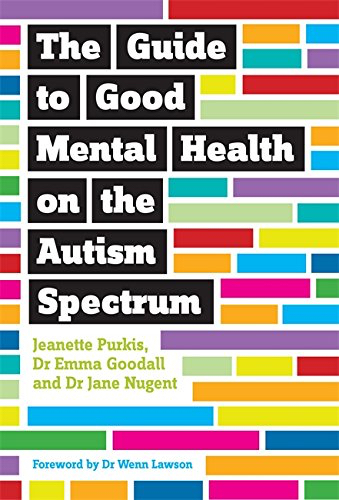
I still think mental health clinicians could benefit form more understanding of autism and neurodivergence. This is an ongoing issue. In this space knowledge = power and autistic people accessing mental health services would benefit from those treating them knowing more.    People should feel confident to access mental health support not anxious and frightened they will be discriminated against. I have a book on the topic (I’m Yenn – I have a book on most autism-related topics!!) This one I coauthored with Dr Emma Goodall and Dr Jane Nugent. It covers a range of issues around autism and mental health including accessing services. I would love for mental health clinicians to read our book as I think it would help them to work more effectively with autistic people and deliver services which are inclusive and respectful – and beneficial! I liken poor treatment by mental health workers as being like calling in the plumber to fix a dripping tap and instead of doing this they break your toilet! So mental health clinicians need to metaphorically fix the tap and please don’t break the toilet!

Grief for lost years

I want to talk about grief, but not so much the grief of someone we love passing but more the grief for parts of our life that we consider lost. This came up in a disability discussion group I was part of recently. This was a big topic for many of us in the group, for various reasons.

A lot of autistic and other neurodivergent adults grieve for the time that they were not diagnosed and all the misery and discrimination they faced without their autistic peer group. How they feel that a diagnosis would have made their life that much better, if only an appropriate diagnosis were available in 1982! I have experience this myself. I am a little ashamed to admit this, but I was once – many years ago – at a panel discussion around autism and most of the audience were parents. The parents were complaining – legitimately – that the supports for their kids in school were limited and often hughly unsatisfactory. I remember feeling jealous for those kids as there was NO help when I was a kid due to the lack of a appropriate diagnosis. I went through school as the weird kid that nobody talked to unless they were actively engaged in bullying me! I regret to say for some time I felt jealous of autistic kids in more recent times as at least they had access to some kind of support even if it wasn’t ideal. Thankfully I have moved on from there with my thinking and I am delighted when people get the right support – not jealous – but I do understand the issue and why others might struggle.

Some Disabled people – especially those who have acquired their disability in adulthood and have a memory of life without a disability and miss this and long to go back to a world where they are not Disabled. Likewise, I can understand that, having a few acquired disability conditions myself. I have been taking anti-psychotic medication for over thirty years, and I barely remember a time without it. I do, however, long for a time in my past which will never happen again. An interesting thing about this is that a person can have a sense of  pride as a Disabled person but still be in a state of grief for your past.

In 1994 I was twenty years old. I had a male partner who was a criminal and I ended up committing crimes with him and going to jail. This experience stripped away any innocence I might have had. I became homeless and a drug addict. My life changed dramatically, and it took me a long time to get my life back to anything approximating a good place. And I have, and so go me, but it has left me with a profound sense of grief for my lost life and innocence. I focus on the three years between moving out of home and going to prison. I actually still had a pretty unpleasant life before that, but I was broken by the five years of my life lost to addiction and institutions.

People often tell me that my difficult life in my twenties was what made me the person I am now, and that I shouldn’t regret it. That statement would be fine if there weren’t people I victimised and if the experience hadn’t been significantly traumatic for me as well. Yes, I regret those years and if I didn’t, I wouldn’t be much of a human. Of course, the experience contributed to who I am now but if I could go back in time and start over, I would never make those poor choices.

So yes, I grieve for my lost years. I think I always will, but I use those experiences to ensure I am now ethical and respectful. I suspect that many people grieve for times in their lives too. It is valid.  

Who am I? perceptions of self and others

A while back I realised that some people find me intimidating. This seemed very odd and misplaced. In my mind I am not intimidating at all – I see myself as a funny little autistic author person with a difficult past who loves art and cats. I certainly don’t find myself intimidating – and indeed would not really want others finding me so either!

Another area where there is a disconnect between my view of myself and others’ view is around my autism / neurodivergence. I rarely think ‘ooh I am really autistic’ but apparently my presentation is as quite a typical sort of autistic person – if indeed such a thing exists! I am odd, colourful, loud, quirky, passionate, even weird and that is OK but those are not my observations of myself. I am just me.

Another area where my perceptions differ is around my perception of others and their capacity for negativity and aggression. Inside my mind there is no aggression, very rarely any anger and I trust everyone because as I am trustworthy meaning that I assume everyone else is. Unfortunately, they often are not! My approach often means people take advantage of me because I don’t expect them to.

I think these perceptual differences – and especially those between autistic and allistic people are not just confined to me. I suspect a lot of other autistic folks experience similar things. Of course, just as there is a mismatch between my perception of myself and others, this works for everyone else too.

I don’t think the mismatch is necessarily a bad thing, just a thing really. I do think self-protection is important and being aware that just because you are a safe and trustworthy person it doesn’t necessarily mean everyone is. I had a session with my art therapist yesterday and we discussed this topic. She said there is a statement ‘your perception doesn’t equal my reality’ which I think relates here. Empathy involves viewing things with this perception difference in mind and understanding that others come from a different – and valid – standpoint and experience.

I don’t think I will ever be able to see myself as other dos. And I don’t think others will know how I view them either. However, I think it can be helpful to be aware of this issue and to know that our perception of self probably differs from that of others. I am fascinated by this and often wonder how others experience me. I always aim to be a safe person, a kind person and a trustworthy person. I think you can’t go far wrong with that as an approach to life. As I grow older, I start to understand these considerations better. I didn’t even used to be aware of this as a thing but now I do. And if people have feedback to share about how I present the world – unless it is hostile or mean – I am up for that as it helps me to understand myself better and address anything that needs addressing which I am not aware of.

Yennski’s holiday

I just returned from holiday – something I have not done since 2008 – and even that was half-holiday and half book tour! For my entire life – all 51 years of it – I have wanted to see the desert. I have lived in Australia since 1986 so you would think some desert would have featured in my experience! Alas no. I grew up in the country, but it definitely wasn’t desert country! I moved out of home in 1992 and moved to Melbourne and have lived in cities of one kind or another ever since!

I have meant to travel to the outback, but it just never seemed to happen. Earlier this year my parents told me they were planning a holiday to Queensland and Northern Territory and that they would be in Alice Springs. I asked if I could come along for the Alice Springs bit for a few days and so it happened.

Flying up from Adelaide I had a window seat and looked out at massive expanses of desert country. It was truly magnificent! We landed at Alice and the landscape was like something from another planet. My parents met me at the airport, and we went to the hotel. I was so tired due to having got up at 2 am – I always get up really early when I have a morning flight. I worry that my meds will mean I sleep through my alarm, so I get up as soon as I wake up – which is usually around 2-3am! I was so tired that when I checked into the hotel, I was worried I would forget the PIN number for my credit card, and I couldn’t remember my postcode! I basically slept all night and woke up to a new day in the centre of Australia.

We did so many amazing things. The desert was as magical as I had imagined. It felt like home somehow. I found myself overwhelmed by the sense of ancient time and history in the landscape. Australia is home to the oldest continuous cultures in the world. Of course, this is as true in Canberra as much as it is in Alice Springs, but the sense of time and ancient human history – and geological history – seems that much greater in the desert, more immediate. It is hard to describe that sense of ancient time. It was amazing. I felt like I had been there before.

One of my main goals in the desert was to purchase some art. I did a bunch of research on galleries selling artwork by First Nations artists. I had a list of about eight galleries. On Monday we were in the centre of town and there was one of the galleries I had researched so I went in. It was stunning. They had art from a range of regions including sculptural works by the Tjanpi Desert Weavers. I love their work so purchased a sculpture of an echidna made out of yarn and dried grass. I bought a canvas in the traditional style illustrating a women’s Dreaming story as well as a little bowl with purple and blue decoration. I had a great conversation with the gallery owner who works closely with the artists whose work he sells. The gallery owner told me that the canvas I bought was painted by one of the youngest of three generations of women artists. He gave me bios for the artists who created each of my artworks as well as the Dreaming story that was described by the work on canvas.  

We visited some wonderful places including Standley’s Chasm and the Alice Springs Desert Park. The Park was fantastic. They had loads of exhibits for animals and birds, including a transgender black cockatoo!  The keeper explained that the cockatoo had initially had female plumage which apparently is very distinctive and colourful. They then took on the male plumage and behaviour. So now I want to find out about other transgender animals!! One night we drove a little way out of town and parked and turned off the lights and just looked at the stars. It was just stunning!

So, my holiday lasted four days which is not a long time. I didn’t do any paid work – apart from responding to one email. I had my phone on silent most of the time and I had an absolutely wonderful time. I think I may need to do a holiday every year!

Being with my parents was so nice. I had been a little worried we would irritate each other but I needn’t have worried. They were both delighted at my response to the desert and also delighted to share the experience with me and see my response, When we parted company to catch our respective flights home I did something I had never done before and kissed my mum on the cheek. I surprised myself but it seemed fitting.

I am intentionally not talking about the level of inequality which is highly evident in Alice Springs and other desert towns. I am definitely not unaware of the issues and that is something for a future blog post. This one is more about my experiences and how amazing it was to visit this part of the world. I know – and it was clearly apparent – that there are basically two distinct ways to experience Alice Springs – that of tourists and those employed in the tourist industry and those who are marginalised.

And if you haven’t been to the desert and want to then please go. It is amazing and moving and my short visit was life changing.

One happy, non-stressy Yennski

When I was a child, my dad was friends with a man who was a business consultant of some kind and was a good judge of character. He told my dad that I would ‘get whatever they put their mind to’ in life. This was an interesting observation of a nine-year-old child, but it turned out to be true.

When I was a teen and young adult, I intentionally sought out negative outcomes for myself and guess what? I got negative things as a result! I discovered how easy it was to throw my life down the toilet – and I can attest from experience that it is frighteningly easy to do this! I spent four years as a prisoner between 1994 and 2000, dropped out of uni, had a major drug problem which led to me getting a diagnosis of schizophrenia – which I still need to take pretty brutal medication for now, even thirty years after the first episode of illness! Yep, screwing up my life and jeopardising my future didn’t take alot of work at all! I got what I wanted and what I wanted was not good.

In 2000 I was released from prison and started on a very different path. I decided that I wanted the new millennium to equal a new life so changed my ways. I aspired to be ‘ordinary’ – meaning I wanted an education, a professional job, a mortgage and a suit. And guess what? Within eight years of that goal, I had all those things. impossible? Not when you apply my absurd level of determination and motivation and through doing so proving my dad’s friend right.

Of course, my life was not easy at any point, but things did change in a big way.

Almost twenty years after acquiring my aspiration of a professional job, mortgage, suit and so forth I am actually happy. Not manic or delusional but genuinely happy. Anxiety always used to be my constant companion. It was severe and resulted in a number of episodes of psychosis – the anxiety neurotransmitters in my brain somehow trip off the psychosis chemicals resulting in – in my case anyway – years of misery and a very long time in recovery. A few years ago, I was so anxious it resulted in a suicide attempt! When I was in hospital afterwards talking to the psychiatrist and I said my suicidal behaviour was triggered by the internet not working at my house, he took it pretty seriously and for the first time ever I was properly medicated for anxiety. This turned out to be life changing! No longer did everything stress me out and make me miserable and worried about the anxiety triggering psychosis.

A couple of years ago I experienced ongoing bullying which made me very anxious and miserable. My psychiatrist at the time – a lovely woman called Julie – said how impressed she was with managing my stress and other feelings around the bullying as she had been very concerned the stress around it would result in psychosis. I think overcoming this situation with the bullies was the start of a period in, my life that I called being ‘non-stressy Yenn’. Nothing really worries me at the moment. I don’t; catastrophise about things and I usually have the approach to life that things should work out. It is amazing!

The other day I acknowledged that I was happy to go to sleep because going to sleep is such a nice thing! I appreciate how wonderful things are and face the world with genuine gratitude. How odd! It doesn’t mean there are no challenges in my life – far from it. It just means I respond to things indifferently. I am in almost constant physical pain with my arthritis and there is a whole subculture of bigots who hate me and my work and all I stand for. One of my books even faced bigotry and attempted cancellation the other day. This is not OK on any level but my main issue with it was that the bigots were harming transgender people rather that they were attacking my book.

I love being non-stressy, happy Yennski. I am not sure if this is a permanent state of being or if I will go back to worrying about everything but, as Janis Joplin wisely said, ‘get it while you can!’ I wish everyone some of my non-stressiness 🙂

Coming to terms with my ‘other’ diagnosis

I was talking with a friend the other day. They asked which of my diagnoses of autism and schizophrenia came first. In fact, they both came fairly close to each other – autism was 1994 and schizophrenia was 1995. (ADHD by comparison was in 2019 and anxiety somewhere in the mix – I don’t remember quite when!).

I was in denial about my autism for seven years after I got the diagnosis. Impressive though that is in terms of magnitude of Yennski not getting it, my schizophrenia diagnosis took me a lot longer to accept.

I have taken medication for schizophrenia for over 30 years. These medications are pretty brutal and most have significant side effects. Doctors do not generally prescribe such things lightly, but I still believe for many years that the meds were for something else. Even now I wonder on occasion if I need to take the meds. It is a common experience apparently – thinking ‘I feel well so I can stop with the medication’. The one time I did stop taking the meds I get extremely unwell and spent a month in hospital – something which you might think would demonstrate that I probably do have the diagnoses!! The other reason I am reluctant to take the meds is that I think I don’t have the diagnosis so why would I take the medication for it?

I have had a number of psychotic episodes and psychiatrists and nurses in hospital have told me that what I was experiencing was psychosis but even then, I didn’t really accept the label. I have gradually started to accept schizophrenia over the past few years and only really properly accepted it in recent months. I am not 100 per cent sure why it took me so long to come to terms with my schizophrenia diagnosis. I think popular culture may have had an impact. People with schizophrenia in popular culture are usually irrational, unable to engage in things like work or intimate relationships, are constantly unwell and are either perpetrators or victims of violent crime (usually perpetrators. In fact the term ‘psychotic’ tends to be used – incorrectly – in popular culture to describe a person being violent.  There are very few representations of schizophrenia in the media and popular couple that are positive. In my case, because I did not fit the stereotypes it contributed to my belief that the diagnosis was inaccurate.

I didn’t want to have schizophrenia. To my mind there was nothing particularly good about it and a lot of negatives. When I was in hospital, I would see other people who were experiencing psychosis and it scared me, especially when I saw older people. Would this be me as I grow older? I wondered.

I now take a medication called Clozapine. This is an anti-psychotic medication which is only ever prescribed to people with treatment-resistant schizophrenia. Over the years hospital psychiatrists tried to put me on Clozapine, and I always declined. In 2020 when COVID had just become a ‘thing’, I went on Clozapine. It took 17 weeks of monitoring and tests and even now I need to have monthly blood tests and see a Clozapine nurse every month. I describe Clozapine as being a great medication but being a pain in the butt! It has actually been life changing. Things which I thought were correct without any doubt – such as there being ghosts in my house and being unable to do a bunch of things for fear of angering the ghosts – have become non-issues since going on Clozapine and I now recognise that these and other beliefs were due to delusional thinking.

So now after thirty years I have properly embraced my ‘other’ diagnosis. It is not shameful, and I do not need to be some kind of popular culture stereotype. It is part of me like all my other brain things are part of me. I can mostly mange it with medication and therapy. I am now meeting other autistic people with a schizophrenia diagnosis – there is a whole community of us! Schizophrenia is not reason for shame or self-loathing. It is another part of what makes me who I am. Like any chronic health issue it needs some management and understanding. It amazes me that it took me so long to accept my schizophrenia. I am meant to be wise and insightful. I guess I can’t be wise and insightful about everything! Anyway, it is nice to be in a place of acceptance and understanding.

Unwell Yenn drawing from 2019

‘Go my team – not!’ or being someone with no sense of allegiance

I was down the street today to donate some items no longer required at Yennski HQ to the Salvos op shop. It is a nice walk – about twenty minutes through Gungahlin town centre. There are often people out with their dogs – and one person who walks their smoochy Bengal cat on occasion! Today, as soon as I left Yennski HQ I noticed some very loud people. I was concerned for my safety before realising that they were football fans and evidently there was a game today and they felt the need to celebrate! They all wore the same tops and beanies and were definitely together through their shared love of the Canberra Raiders rugby league team. This baffles me. I have never felt an allegiance to a football club or any other sports team. And I do not feel anything in terms of my nationality. If Australia are playing cricket against, for example, India (or anywhere else) I have no wish for them to win and I feel nothing if they lose. I am not in the team, and I do not share any friends, family members or colleagues who are in the Australian team – or the Indian team for that matter! As such it confuses me as to why anyone would care unless they were participating themselves or were close to someone who was.

I am not sure if this is an autism thing or an ADHD one or if it is related to any of my other identities or if it just one fo those quirks of being Yennski! The interesting thing is that I DO have a kind of allegiance to some of the intersectional groups I belong to but not in the football team or national pride sense. I am proud to be AuDHD, I am proud to be Asexual, and I am proud to be non-binary, but their allegiances seem to be different to the groups most people seem to have allegiances for and probably for different reasons.

 For example, if the non-binary football team (hypothetically) were playing against the cis gender team I actually wouldn’t care about the outcome either so maybe it is just that I don’t really care about sports! I suspect it is different to that though. My allegiance to my neurotype and my gender and sexuality come from a place of support, empathy and kindness in the face of a shared experiences of bigotry and hate and living in a world which doesn’t always support or respect us. Football teams do not generally face bigotry and discrimination due to which team they play for!

So, my allegiance for my gender identity, sexuality and neurotype are probably more about supporting my peers and addressing hatred. I am not proud to be an Australian – it is largely meaningless to me. Australia is a great country in some ways and a horrible one in others. I don’t think Australia in essence is all that different to a lot of other countries so why would I need to feel proud to be Australian? However, I am proud to be Ace and trans and AuDHD. Maybe the difference is that I feel part of those groups that I belong to and what happens to my peers also impacts me. The concept of being Australian is maybe too broad to mean much in terms of allegiance or belonging. Maybe if I was a member of the Australian cricket team I would have allegiance to that and care if we won?

I hope people don’t think I am awful because I don’t care about sports and because my nationality isn’t something I strongly attach to – or attach to at all! I am being honest and raising these ideas in case anyone else has a similar experience – and to explain that experience from my perspective.

How pain replaced anxiety as my constant companion and why I am happy for the first time ever

CW: Bullies, mental health issues

Since I was a child, I had a companion who walked with me every step of my journey in the world. It was definitely not a friend. Its name was anxiety. It related to so many things – worrying, catastrophising, fear, phobias, the list is endless. I had a reason to be anxious when I was a school student as every bully at every school I attended made a beeline for me. The advice I received from the various adults in my life was unhelpful to say the least. I was told any number of foolish strategies – ‘just stay away from them’ (um, it’s a school yard not a country) ‘boys will be boys’ (seriously WTF??) ‘They like you. It is just their way of showing it’ (seriously even more WTF!!). Nobody made the bullies accountable for their actions – all the focus was on me to do something. Consequently, I lost any self-esteem I might have had at some point and was afraid to go to school. The bullying resulted in post-traumatic stress which impacted my anxiety.

As a young adult there were all manner of new anxiety triggers – paid work and the social element of that, predatory men who seemed to be everywhere I went and as a twenty-year-old going to prison (long story – if you are interested, I have an autobiography which will tell you all about it). When I was 21, I discovered anxiety combined with illicit drug use can cause psychosis. Cue the past thirty years of my life taking medication for schizophrenia and having periodic episodes of psychosis – imagine being in a waking nightmare you have no control over). Unless there is a miraculous cure, I will have that for the rest of my life. And every time I get highly anxious for a period of time it triggers off the schizophrenia chemicals in my brain and I suffer. A lot. For a long time. It is not pleasant.

However, in recently month the companion that is my anxiety has apparently taken a break. It is not with me all the time and when it returns it is less of an issue. There are a number of reasons for this including medication, my confidence growing and getting lovely feedback from my managers and clients in my various jobs about the good work I do. Finally, I am enjoying being Yenn. I am happy some of the time. It is amazing. I didn’t realise happiness was ever going be a quality describing me.

Unfortunately, one unpleasant companion has been replaced with a new one – physical pain. I have always been very able to manage physical pain. I had a six-hour continuous tattooing session a while back. The artist was very impressed at my ability to stay still while she drilled away! I told her ‘It’s just pain.’ But in the past year I have had constant physical pain due to arthritis. I use a cane some of the time and I am in pain whenever I walk, when I get out of bed an often when I am sitting or standing. I am not used to this. It makes walking any distance unpleasant and I avoid doing so. I realise that people who do not experience constant pain have very little understanding of what it is like.

One thing about having a visible disability – a new thing for me – is people’s reactions. My cane usually ensures people stand up for me on public transport. And people are often more pleasant to me than they were in the past. Given I have had invisible disabilities my whole life this is a very strange thing. The pain itself is unpleasant and knowing it will probably we with me forever – along with my schizophrenia – doesn’t fill me with joy. I can’t take a lot of the painkillers because of interactions with my other meds – and if I had to choose between physical pain and psychosis, I would pick physical pain every time! So, I have to manage things. One good thing about constant physical l pain is it is very effective in building my empathy with others in similar situations. And another thing is that other people who use a cane and wheelchair users that I meet in my travels often nod or smile in acknowledgment!

I always joke about my health conditions that when they were handing these things out, I got confused and kept going to the back of the line to collect another one! It certainly feels like that. I am not overly enthusiastic about having a mobility condition and the pain that goes with it, but I actually do really enjoy not being constantly anxious and worrying that my worrying might trigger psychosis and result in me being out of action for a year or more! I suspect the pain is something I will need to manage and learn some more strategies to manage it.