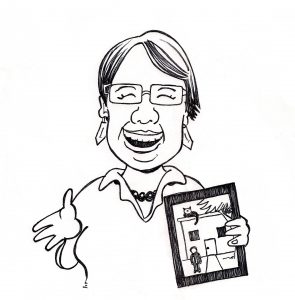
Autism and criminal justice – My story

2 September is an auspicious day in the Yennski calendar and sadly not a very edifying one. On this day in 1994 I went to prison for the first time. I went back on several occasions. What would twenty year old Yenn, a university student form a family where there was no contract with the criminal justice system end up on the wrong side of prison walls? Initially it was because of a relationship with a very dangerous man who was almost ten years my senior. I started a relationship not realising how dangerous he was. By the time I finally figured out that he was bad news I had got in very deep and feared that if I left him that he would probably kill me. So I went along with his crimes – very reluctantly – out of fear of what he would do if I did not. This resulted in me committing a robbery with him and going to jail for six months. 

The world of prison was very different to any of the worlds I had encountered – namely Christadelphian church members and socialists – the only two social groups I had belonged to at that point. I realised early on how I needed to ask in order to survive in prison. I was so adept at this masking that I ended up believing  it myself! I was a big scary criminal – apparently. I realised that prison was like a malevolent high school where the bullies could kill you. While I never fitted in at high school, I learned to fit in within prison walls because my life actually did depend on it. 

My first arrest resulted in a number of additional things to me going to prison. It also resulted in a new identity for me and a massive drug habit when I was released. I self medicated with drugs after I was released from jail the first time. I had experienced a lot of trauma and witnessed some very dark things. I knew how I felt when I was on drugs. It was reliable whereas being ‘straight’ was scary and emotionally unpredictable. The trauma feelings would attack me so I avoided ever being ‘straight’. I lived in a house full of drug dealers. We stopped paying the phone bill so the phone was cut off. Then we stopped paying the rent so we were evicted. I faced the very real possibility that I would be sleeping on the street. This stress coupled with the extreme drug use resulted in me becoming psychotic. I still have schizophrenia almost three decades after that. This is why I worry when young people get into drugs. I wouldn’t wish schizophrenia on anyone.

After this I ended up in supported accommodation and hospital and then once more, prison. The next prison sentence related to me being psychotic and believing that prison was a derepression cure. I kept committing crimes in order to go to jail where I thought my mental health would behave. This began three years of being in an out of jails and psychiatric hospital wards. I was unwell and I was institutionalised. Basically what happened for me was a justice response to a mental health problem. Magistrates would despair of the situation, saying I shouldn’t be sent to jail but that there was nowhere else to send me. I was the most desperate and broken human being you could imagine. This is funny because these days I think some people think I am telling fibs when I talk abut that time in my life but it is 100 per cent the truth. 

I escaped form that would initially through attending a mental health residential service which gave me more confidence to be myself and to see hope for myself not just the endless misery which had pretty much been my life up to that point. People supporting me and having faith that I could – and would – change was a huge catalyst for change in my life. It was never a full gone conclusion that I would change my life. Things could have gone either way for a long time. Now I am confident that prison won’t feature in my future but it was touch and go for a long time. I even abused drugs on occasion up until 2004. 

The big change for me was the publication of my autobiography in 2006. After that thing were pretty much on track. Now, some 17 years later, I am a career public servant who owns property. In fact I have owned two properties, and sold one, Whimsy Manor, in 2020 and bought Yennski Central, where I currently live, in 2022. I describe myself as unusual but a lot of other neurodivergent people end up in the criminal justice system, even when it is not an appropriate response to their behaviour. Often a criminal justice response is applied when it is not appropriate and doesn’t help anyway. While I don’t excuse any criminal behaviour that I or others do, it is important  to be aware that criminal behaviour from neurodivergent folks is often not because they are ‘bad’. There is a wide range of reasons for criminal behaviour and it is important for courts and police to understand this. I am delighted to not be in that world any more as it is a horrible place where hope is a rare thing.  

Challenges with micro-aggressions, unconscious bias and unchecked privilege 

I belong to a good number of inclusion / intersectional groups. I am a couple of kinds of Neurodivergent, many kinds of Queer and have a traumatic past which include some pretty horrific experiences of institutional neglect, incarceration and associated powerlessness. Every day of my life I am reminded that I am different, that I face disadvantage, that I am seen by some as being ‘less.’ I experience everything from unintentional unconscious bias to outright hostility and hatred. It is exhausting.

I will share some of the more memorable micro-aggressions I have experienced since coming out as non-binary. I came out in 2018 for the first time on Facebook (as you do!!) A trans friend told me I would discover who my friends were, who they weren’t and that it would surprise me. They were absolutely correct. Some people reacted the way I expected but not everyone did. Social media can be a scary place and it is full of bigots but also people who might be well-meaning but who come out with some doozies in terms of bias and micro-aggression. My favourite was the person who said I couldn’t wear a skirt if I was non-binary because skirts were for girls. I wondered if this meant I shouldn’t wear pants either given that they are gendered male. Who knew?? Another one was the person who insisted that my Facebook page was about autism not gender and I should stop talking about gender on my page. I mean, it is my page. I could post about bunnies if I so desired or Lego or the music of Bjork! 

It is not confined to the world of gender diversity. As an autistic person I have been on the receiving end too. Someone once said at the launch of one of my  books ‘oh don’t say you are autistic – you could pass for normal.’ Add that to the countless people saying ‘we are all on the spectrum somewhere’ and those telling me off for identifying as ‘Autistic!’ All of these come from ignorance and unchecked privilege but the gender-based ones tend to be the most likely place for outright hatred and the autism ones are due to ableism and ignorance.

I have been trolled by strangers and ’friends’ alike. Someone even managed to say something horrible about my late and very much missed moggie Mr Kitty. What kind of hatred does a person have to ahsave to a attack a dead kitty?

Last weekend I had a workshop which was in a building in Barton. Apart form the organisation running the workshop there was one staff member from the building. At morning tea this person was quite patronising to me – I must have been wearing my ‘Disabled’ sticker! Then shortly after that I needed the toilet but I didn’t know where it was. The staff member from the building said to me without hesitating ‘the ladies is that way.’ I am fairly certain she was trying to be helpful but it really upset me. I wish people would not assume gender – and particularly  MY gender! I was talking about it to a friend today and she said that most people would assume gender when they saw me and I understand that but it just upsets me. I rarely assume gender based on looking at a person – although I admit I have done it before. For me a person could be any gender and wear any kind of clothes. I am not going to assume they are a particular gender. Surely this is why we introduce ourselves with our pronouns. 

It is a full time job managing all the bigoted nonsense that is out there. We need a lot more understanding or trans experience and we need more positive representation or trans and gender divergent folks. Ice again, things are improving in the neurodiversity space  but there is still a long way to go. 

I educate people where I can. Some activists say we shouldn’t have to educate ignorant people but I am always happy to educate – although I agree that other people’s bigotry and bias is not my responsibility to fix! 

I am lucky in this area. I am a confident, accomplished Autistic, non-binary and Asexual person. I don’t take crap! I am an alpha personality too and am more than happy to pull someone up if they do the wrong thing – gently leading those who don’t mean it and challenging those where there is intent. Sometimes people say ‘I can’t use your pronouns because it is too hard.’ That is common one I have got over the years and I have to turn it around and explain how it feels for me to be misgendered.

I think things are improving in this space but there is never room for complacency. There are plenty of people who would have me simply because I am non-binary. So keep flying the flag for inclusion in all its forms  and if in doubt, ask a trans person.


Disability, advocacy and power 

I was having an epic lunch on Friday with a good friend and fellow disability advocate / activist. I related a story of pulling up someone who was using very inappropriate language around schizophrenia. I talked about how even though I knew I had done the right thing I still felt uncomfortable and didn’t want to be seen as ‘difficult.’

I am an alpha personality. It is one of the secrets to my success but even then the idea of not making trouble is pretty much ingrained in my psyche. We talked about this and about how often other advocates experience  discrimination and disempowerment.

The thing that gets me about this is that the leaders, the advocates and activists experience aggression and ableism and struggle with it, like me not wanting to be ‘difficult’ when I am an advocate with a large following and lengthy experience! If advocates struggle with this how does everyone else cope? I am confident an have a bunch of self-esteem but I am also ground down by ableism, discrimination and bullying that I have expected over the years, If I struggle with standing up for myself what happens for people who aren’t advocates and who don’t have the kind of self-esteem and confidence that I do?

If the advocates struggle with challenging unhelpful and ableist thinking what does this mean for others who are not advocates and who feel very disempowered? And challenging poor thinking and behaviour definitely relates to power. Advocates are likely to have more personal power and influence than those who are not advocates. Ableism and discrimination clearly relate to a power dynamic and the more disempowered a person the bigger challenge this is likely to post.

I guess that is the point of advocacy to empower people to stand up for themselves and call out ableism an poor behaviour. I think for me it is quite complex. The past few years of my life have been quite affirming and have built my confidence but most of my life before I was 30 was pretty invalidating and negative, leading to me struggling to stand up for myself. I think Disabled folks often have similar experiences. We also live in a world where it is expected that Disabled folks shouldn’t complain or be ‘bolshy.’ We should apparently be grateful for things other consider a right. Apparently we should accept whatever we are given and not complain. Yep, ableism is all around. 

It took me many years to become assertive and even now I struggle, When I stood up to the person misusing the term schizophrenia to describe his career (as in the idea of a split personality – this I highly offensive to schizophrenic folks, including me), as soon as I finished pulling him up I felt guilty and downplayed my initial comment. This from an advocate of almost twenty years’ tenure!

I think the more we model being ‘difficult’ the better. If we don’t call things out they will go unchecked and other Disabled people will experience that discrimination and feel they can’t challenge things. And I am sorry that I backtracked a bit when I challenged the person the other day. It would have been better if I held my ground. In future I will try to be confident in my challenge but it is difficult. I am a very gentle advocate but I think sometimes I – and the wider world – would benefit from a. Yenn who is a bit more bolshy. The more advocates model assertiveness and challenging unhelpful and ablest thinking and comments the better. When I say something ti doesn’t only help me it helps others as well.  

Why toilets are political – and why I wish they weren’t!

I was talking to a cis gender friend the other day. She said ‘well there isn’t anything interesting about bathrooms…’ This was a very different view to mine as a non-binary person who doesn’t use the gendered toilet facilities! For me – and many other trans people – toilets can be very fraught. Many buildings have accessible bathrooms for Disabled folks which are described as ‘accessible and unisex’, some have unisex toilets and some have all gender facilities but sadly some have only gendered facilities. Knowing which loo to use is a big issue for me. I don’t like to use the accessible bathroom.  I will avoid using the gendered ones and sometimes have to hold on due to there being no appropriate facility which is not very healthy and I really shouldn’t have to.

Toilets are political because gender diversity is political. I was asked to give an interview in the USA a while back. They asked me what I wanted to speak about and I immediately responded ‘autism and gender diversity’. The  producer said they couldn’t have that as a topic because they don’t share ‘political’ content. I was horrified and declined to do any interview with them. Why is my gender ‘political’? It is just an attribute I have, part of what makes up my identity and sense of self. Is my mum’s gender ‘political’? Is my dad’s? No because they are cis gender which apparently isn’t political but my gender is somehow different.

I don’t see being non-binary as political. I just see it as who I am. I celebrate my non-binary identity but there are many people in the world who would hate me just because I exist. There is a whole nasty subculture of transphobic bigots. They are vocal and have a big reach. They say horrible things about transgender folks, especially trans women and kids but really when it comes down to it they hate all of us. I don’t understand why these people are so full of hate. Trans people don’t have an agenda, we are not coercing children into being trans and we are not recruiting. My only agenda  is to try and make a positive difference in the world, cuddle my cat and have a gin and tonic on occasion! You actually can’t coerce a person into being trans. Someone will find their own identity but someone is not going to identify as trans because  someone coerced or somehow recruited them. Autistic trans kids are often the recipients of that kind of transphobia. The idea that trans autistic kids can’t know their own gender is prevalent amongst bigots. I will say that I have ALWAYS known my gender is not cis female. The only reason I didn’t come out was that ist was the 1980s and we had no idea about different genders them but if I was a child now I would probably have come out at age 5.

Being non-binary for me is political simply because of the world we live in but it shouldn’t be. In Yennski’s preferred world people’s gender would simply be their gender, no politics involved at all. Sadly we live in a world where trans people are subject to violence and hatred and there is a large group of people who pretty much dedicate their lives to being horrible to us! I really want a world where toilets are not political and where trans folks can be treated with respect and inclusion  and our gender has no politics attached and is just our gender. And if all buildings had all gender toilets that would be a very good thing and great place to start. 

Yenn is 49 – getting older as well as I can

Today, 23 July, is my birthday, I usually celebrate my name day on 20 May but today is also an auspicious day in the Yenn calendar. I was born exactly 49 years ago. Wow! Everyone tells me I don’t look my age. I think that is an autism thing because lots of autistic people look younger than their years. I am not sure why that might be. Someone suggested it may be due to autistic people having more collagen in our bodies but I really don’t know. I am not complaining!

It is hard to imagine that I am 49. I don’t feel 49 – although what 49 is meant to feel like I have no idea! I am supposed to be ‘middle aged’. I have coloured hair are wear art t-shirts and silly shoes so my style doesn’t ‘act my age’ but I can’t imagine a world where I don’t have coloured hair and silly shoes! My style is not about how old I I’m but about my own sense of identity.

I was diagnosed as autistic when I was 20. I was diagnosed with schizophrenia when I was 21 so I have had both diagnoses for most of my life. Life expectancy for both autistic people and those with schizophrenia is significantly lower than those without the conditions which means statistically I probably don’t have much time left. However I have no intention of leaving this planet any time soon. I have way too much to do! 

I actually like being older. Well mostly. I worry that I will turn into one of the ageist older people who mistrusts young people but I am not there yet. I probably have more in common with younger people than older people. I think being non-binary helps with that. A lot of older people can be quite transphobic but I am definitely not that! Well apart form some internalised self-stigma but I am fine with every other transgender person! 

My parents of course are another generation to me entirely. Their friends all seem to be getting old and dying or getting dementia. It really is quite frightening. I worry that my parents themselves all get dementia or cancer for have a heart attack. They are pretty healthy at the moment but I am quite concerned. The other thing I take from my parents’ experiences around ageing is that life ends. You get old and then you die. I have quite a strong understanding of this but it is something I hadn’t really articulated until recently. That will probably be me too. It isn’t all onwards and upwards. Life comes to an end and often when you get to that point you are relieved to leave the world because life is fraught and painful. I had honestly never considered that until recently. Maybe that realisation is an ageing thing too. 

But for now I am not thinking about dying. I am thinking about using my experience and what a colleague described as ‘Yenn’s enormous brain’ to make the world a better place. To use my experience of being around for 49 years to make change, support people and change things for the better. And probably write a book or two!

Medication – Thoughts after 28 years 

I take medication. I have been taking medication for schizophrenia since 1995. I have tried most of the schizophrenia medications and am now on the sort of end of the line drug, called clozapine. More about my good friend clozapine later!

I also takes meds for mood (lithium – since 2011) and anxiety (sertraline since 2021 and should probably have been on it many years before that!) I also have a bunch of physical illnesses requiring daily medication.

Some people think taking medication is a bad thing but not me. I think it is liberating, My various medications have changed my life and made it possible for me to do all the things I do. Without my meds I suspect I would spend my entire life in the psych ward feeling terrified and miserable. With my meds I am able to work full-time and do a bunch of cool things, such as writing this blog and any number of books!

One thing people worry about is medicating kids. I don’t really have a clear cut opinion on this. I know that some kids really need their meds and the medication has completely changed their life for the better so I would not want to deny access to meds for these kids but I do understand parents’ concern around medicating their kids. It is a big decision.

I know some people are against medication completely. I wish I had the luxury to not take mine due to some ideological objection but my schizophrenia and anxiety make that impossible. I don’t hugely care about ‘big Pharma’ if not being medicated means I spend most of my life unwell and psychotic. Psychosis is basically like being in a waking nightmare and not being able to wake up. I wish I was able to morally object to the companies which supply me with my meds but that is not a luxury I have!

So clozapine, Yennski’s lovely clozapine. I spent 46 years of my life not taking clozapine. Of those years I took anti-psychotic medication for 25. I had a baseline of unwellness and was usually frightened of things that most people wouldn’t consider scary. I have lots of episodes of acute illness and life was very challenging. In 2020, as COVID was doing horrible things and we were all locked down, I was in hospital for four months – one of my longest ever admissions. My psychiatrist asked if I wanted to go on clozapine – the last line of defence anti-psychotic drug. All I knew about clozapine was that it has potentially life-threatening side effects and that it made you sleep. I imagined myself as a zombie – a schizophrenic stereotype. I had declined several other doctors’ offers of clozapine in the past but by 2020 after a very scary episode of illness I thought ‘meh, why not?’ It takes a long time to go on clozapine. They start with a tiny dose and work up very gradually. At the start of the process I would as look at the pills in my hand and say ‘please be my good friends little clozapines’. And they actually did become a very good friend.

My illness is less of an issue than it has ever been now. My regular psychiatrist who I have been seeing on and off since 2010 said I am better on clozapine than he has ever seen me. I have not been psychotic since then and I have managed some really stressful situation without getting unwell. Clozapine is a pain though. I have to have blood tests every month and regular heart scans. It makes me sleep for twelve hours every night and I work 9-5 so I don’t really get evenings any more but I actually don’t care as it has changed my life. So, a life changing pain in the butt!

So yes, medication – go the pills! My medication enables me to do all the cool things that I do. I know it is likely I will take the meds for the rest of my life and I am aware they may well shorten my life but quality not quantity in such things I say. 

How my world of work went from woeful to wonderful – navigating the workforce as an autistic person 

The image for this post is my latest book which is all about employment and autism. Employment is a big topic for me and I think for many others. 

You may know that I am now a career civil servant of almost 17 years tenure. This is a good thing and a huge privilege but it was not always the case that my world of work was wonderful.

In February 2000 I was released form prison.  I was living in crisis housing and life was very challenging, Towards the end of 2000 I moved into a house for young people with mental illness. This was actually a big step up from where I had been and I saw it as the start of my new life. When I was there I saw women walking their children in the park. It was a very swanky suburb and these women were not poor. Rather their partners worked and earned enough to pay a million dollar mortgage on one income. I saw them and thought that maybe I too could have  a professional job and pay a mortgage. I wanted to be ‘ordinary’ – which to my mind meant to have an education, a professional job, a mortgage and a suit. Spoiler alert… within eight years of my decision I had all those things! Go me!

It was a very challenging path though. I enrolled in university in 2001 and loved my course. I was a very successful student getting lots of high distinctions and awards. I was invited to join an honour society for high achieving students. At this point I thought employment would be the logical next step. I got myself a job washing dishes in a restaurant. It wasn’t difficult work but it was actually very difficult due to my high anxiety. I worried about work constantly. What would happen if I made a mistake? Would the restaurant go out of business and it would be my fault? The anxiety was so bad that ti turned into psychosis and I went to hospital and had to quit the job. At that point I had a helpful thought – ‘I can’t work NOW but one day I will be able to work.’ This became the mantra by which I lived my life for the next few years. 

I figured that I needed to build my confidence around working. I just went to university for the next couple of years. I then got myself a volunteer role in a gallery which gave me confidence. I then had a very small business shooting and editing videos for my art school colleagues. I then got a job collecting money for an AIDS charity. All these experiences were incremental steps in my journey to my ‘ordinary’ goal. 

In 2004 I met someone who would become a good friend and also a mentor, autism advocate and author Polly Samuel. I met Polly at a course for autistic people so we could give presentations to schools about autism. I have no idea why Polly was there as she was  already an accomplished speaker but she was there and for that I am eternally grateful. 

Polly encouraged me to write my life story I did and it was published and I guess the rest is history. Everything I had done in the preceding years was about building my confidence to work and the book was the final step in that journey. Three months after my book came out I applied for two government graduate roles. I was shortlisted for one and successful for the other and I am still there now. Polly cautioned me about my public service role saying that such jobs were ‘not autism friendly’ to which I replied that maybe I should make the role autism friendly! Actually I have had an amazing time in my job. I think some people would struggle with the hierarchy and processes but I am all good with such things. My job has enabled me to purchase two properties over the years, the nicest of which I live in now. When I started out at work my first pay was four times what my income on government benefits had been! It was completely life-changing.

I think a lot of people when presented with my situation after quitting the dishwashing job would have given up on the idea of work and stayed on benefits. Of course that is a valid decision and people living on benefits should not be disgraced or judged but I wanted to be able to make decisions about where I lived and what I spent my time doing. When I was poor I was acutely aware of this lack of control and I didn’t like it. 

I know I am hugely privileged now in terms of what I spend my time doing and my income. I am so grateful to have the life I do and the job I do. Being an ex-prisoner in such a role is extremely rare and having all my various other intersectional differences is rarer still but that is how it is. My main issue in employment over the years has been anxiety rather than my competence or level of skills. I am still anxious but it is much better than in 2001 when may anxiety around work caused psychosis. I will say that I think my work of work is wonderful. 

Self esteem, pride and the  politics of learning to love yourself 

Content warning: bullying

Yesterday I had lunch with a friend who is an activist in the Disabled community with a big profile. I mentioned a consultancy and what I planned to charge the organisation that booked me. My friend said she would have charged twice what I did. I said ‘but you are more accomplished than me!’ My friend just looked at me and I realised that this was a bit of a foolish statement. I have thirteen published books, a big profile and have given a TED talk – along with hundreds of other talks. I am extremely accomplished and should probably charge a lot more than I do for my advocacy work. I literally sell myself short.

In fact I am a lot better in this space than I have been in the past. I am a Disabled, Queer person with a history of bullying and abuse. As a child there did not seem to be a lot of praise or respect from the people in my life. My family was a safe place but my parents were quite religious and equated pride with being a negative thing similar to arrogance. This meant that I missed out on a lot of praise from family as they didn’t want to promote what apparently was a sin. Outside of family pretty much every peer I had hated me. Bullying was rife and I believed all the horrible things the bullies said. Why wouldn’t I as nobody seemed to want to counter their views. 

I hated myself so much that I actively sought out negative things for myself as a teen and young adult, culminating with me going to prison in the mid-1990s. I wanted death or misery or both and I sought these out. I hated myself and society hated me. The only people who stood by me were my long-suffering parents who never wavered in their love and support. They saved me really for which I am extremely grateful even now almost 30 years later. 

I did the impossible and overcame my life of drugs and crime. I set about making change but my history haunted me and I rarely felt that there was anything good about Yenn. This attitude is not just confined to previous Yenn though. For people who belong to the various intersectional groups self-esteem and loving yourself is almost impossible. We live in a society which degrades Disabled people, Queer people, People of Colour, First Nations peoples, poor people and people from all sorts of other groups. There are low expectations and outright bigotry. To be proud of who you are and have positive self-esteem can be seen as something of a political act. 

I tell myself this as a means to building my self-esteem which is still bit iffy. When people call me an expert or a leader I struggle to agree with them. As an activist and advocate ist is easier to build my self-esteem as a means of addressing broader societal issues rather than making my own life better is an easier thing to do. If I think of valuing and respecting myself as part of my trying to change the world it is easier for me to do. 

Could you imagine a world where marginalised people were all proud of who we are and liked and valued ourselves? It would be wonderful I think and make it a lot harder for people to discriminate against us. Of course the onus for addressing discrimination should not really lie with marginalised people – society is responsible for doing that but self-esteem and pride for marginalised people is definitely a positive and needs to be encouraged.

And yes, I AM an expert, I DO have a lot to offer and I WILL make a difference!  And the same goes for others of course.

The medical model and social model of disability and the future of diagnosis

I was in a meeting of neurodivergent folks last week which involved a panel presentation. One of the presenters spoke about their concerns with the medical model of neurodivergent conditions and why they had not sought a diagnosis but self-identified. This got me thinking about all of those issues around the medical model. 

Basically there is a medical model of disability and a social model. Under the medical model we are seen as being disabled by our health condition. Autism for example is seen as a disorder or a set of deficits to be somehow fixed. There are some ads on YouTube at the moment featuring an autism researcher proudly saying that we can now give very young autistic kids interventions which mean they will no longer have as many autistic characteristics. More about that later…

The social model of disability is the one I prefer. The social model sees society as the main reason for disability. We become disabled by the world we live in – complete with its assumptions, judgement and stereotypes. Under the medical model I am disabled by my neurotype/s. I apparently need some interventions to fix my autistic bits and my schizophrenic bits as they are a deviation from some norm of existence and as such need to be addressed. Under then social model, the world needs to change to support my needs. I do not need fixing but I need understanding, respect and support. 

The idea of a diagnosis of neurodivergent conditions is in and of itself quite problematic. Within the neurodiversity movement there are conversations around the difficulties with medical diagnosis. If we are not broken and do not need to be fixed, the concept of a medical diagnosis is problematic. Will we have diagnoses in the future or will our identity as neurodivergent be seen as a valid difference – much like being LGBTQIA+. I mean we don’t need a diagnosis of gay it is a way people are and they know that they are. It is part of their identity. So similarly, in the future will neurodivergence be an identity in a similar way. I am not sure but it is an interesting thought. 

I am seeing more and more people identifying as neurodivergent and embracing their identity. It is a lovely thing. So how do we reconcile the medical model which at the moment at least is the dominant paradigm, with the social model and the empowerment which comes along with it? Will there be a need for a medical diagnosis in the future? Will autism and other neurodivergent experiences simply be seen as another way of being? 

 I see these issues as being critical at the moment. There is a disagreement between the medical model and the social model (cue autism researcher from the start of this piece proudly saying how his organisation can make kids less autistic). These things are getting more and more fraught and heated. 

I want a world where autistic people are accepted and supported to be ourselves. I do not see a world where all the autistic kids have been ‘fixed’ as a good thing. I strongly believe that autistic and other neurodivergent folks offer the world amazing things. We have the right to exist as we are and we are perfectly valid the way we are. I don’t want to be fixed. My autism is a big part of what makes me who I am and I am Yenn Purkis – as far as I can tell a lot of other people like me just the way I am as well.     

No reason for shame – thoughts on  being overweight 

I am fat. I have been fat for many years now. It is part of who I am. 

Growing up I learned a lot of unhelpful stereotypes around body shape. Fat people had ‘let themselves go’. Fatness was seen as a reason for judgement and blame. 

I have seen fatness being listed as an intersectional / equity group due to the huge amounts of prejudice and judgement around it.

The main reason I am fat is the medication I take for schizophrenia. If I did not take this medication I would be unable to live the life I do. Plus I would be inhabiting a waking nightmare. I would be terrified and probably permanently institutionalised. So when someone says something rude about my weight I get quite upset. For me the alternatives are be overweight and mentally healthy most of the time or be thin and psychotic. Obviously I would take the option of mostly mentally healthy and fat!

There is a big problem with the previous paragraph though. The problem is that why should I have to justify my weight? Why should I need to explain to people that I am taking medication which makes me fat implying that I am somehow justifiably fat as opposed to having done something wrong! It is a bit like the ‘undeserving poor’ attitude. If I am justifiably fat then that is OK but if I am just fat because I eat lots of donuts then that is bad? It is actually nobody’s business! Body shape should not be a reason for judgement of any kind. Everyone has a different sort of body and that is OK.

In face some cultures favour bigger people and particularly women and see big as being beautiful.

Of course there is a health element to it. Being overweight can contribute to health issues but that is never a reason to discriminate against bigger people. I lost a lot of weight a few years ago and the response I got from people was enormous. They were so happy for me. At the time I was a bit bothered by this. If I did something else that benefited my physical health such as eating more vegetables, would people have greeted this news with the immense enthusiasm that they did around my losing weight? No, they wouldn’t. 

Weight and body shape are very loaded issues in our society. It is obviously good to be healthy but I think our attitudes around weight and body shape often do not have a lot to do with health. There is stigma around being fat and this is not OK. I am big and that is OK. If I was small that would be OK too. Big bodies, small bodies and in-between bodies are beautiful and people should not feel the need to be ashamed of what they look like.