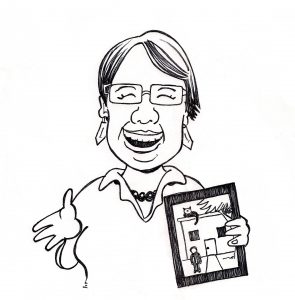
My mum is my favourite human being in the world. She always stood by me even when I did very dodgy things and was aggressive and self-destructive Growing up my mum was my closest friend and confidante. My mum is also autistic. We are now – and for most of my life have been – our own club of two in a very big and often hostile world. When I was a young teen my mum told me she had once been described as ‘brutally honest.’ I didn’t know what she meant by this. It seemed odd. Presumably honesty was a positive quality? As an adult and autism advocate I came to realise that my mum was talking about the autistic quality – which she definitely possesses – of ‘telling it like it is.’
I grew up in a home where you said what you meant and you meant what you said. It was awesome! I later discovered that not everyone likes or is prepared to hear this kind of strong honesty. Most people seem to like to be let down gently rather than told things as they are. It interests me. If I am upsetting a person I would much rather they tell me what I did than what usually happens which is that they distance themselves and I never see them again. I am left puzzled by this and deeply hurt.
I like autistic honesty. It is sensible and I think it is more respectful to be honest. I know how to mask and do small talk but my preference is not to. The honesty thing can be seen as a fundamental difference between autistic people and neurotypical people. It seems that it doesn’t occur to the neurotypical folks to say things honestly the way autistics do. Working on several levels at once and telling people what they want to hear is very different to what autistics do. We tend to operate on one level at a time and what we say is what we mean.
I have met many neurotypical people who are partners to an autistic person saying how refreshing our honesty is. What interests me is that they think it is a choice! In fact honesty for autistic people is more like a default setting. We are not deliberately being honest we are just being ourselves. Honesty doesn’t just extend to verbal or written conversations either. It also relates to body language and eye contact. As an autistic person I have no way of knowing what my eyes or body are conveying. I am not aware of body language and eye contact in myself or in others. I definitely cannot intentionally adjust my body language or eye contact to convey something I don’t actually mean or believe. A few years ago I was working in a lovely team in Human Resources, My senior manager said something which was a bit sensitive about a colleague. He looked at me and said ‘That’s the right eye contact Yenn!’ It was like he thought I was intentionally doing the appropriate thing with my eyes. In reality my eyes were being honest – they only know how to be honest! Luckily my intent was positive!
There are a lot of misinterpretations in this space. Autistic people are so often called rude or disrespectful because our honesty makes people think we are intentionally being unpleasant. It is one of those cultural type differences between autistic people and neurotypicals. We are (metaphorically) speaking a different language which is rarely recognised or understood by the neurotypical folks in our lives. So instead of thinking we are different and our intentions and approach are different they assume we have the same meaning with our words and actions that they would if they said or did those things. Thinking that our behaviour comes from the same place as it would if it was them doing it results in a lot of judgement and ableism. It is one of those areas where education and knowledge about autism is essential.
So yes, I think autistic honesty is not a bad thing but it is a thing that needs understanding if we don’t want people assuming we are rude or, in my mum’s case, ‘brutally honest.’ Yet another area where different is not less.


 Yenn Purkis Autism Page