What to do when your executive function doesn’t want to function!

I have a wonderful art therapist who is paid through my NDIS funding. I love her to bits and find her sessions really helpful – and sometimes revealing! A while back she gave me an executive functioning assessment. I have known my executive functioning might not be in the same area as others’, but I was not prepared for the test results. My score for executive functioning was three per cent! I know these things can fluctuate depending on the day and how the person being assessed is feeling but really, three percent!!

If you don’t already know about executive functioning it is a key part of how your brain works. Google tells us that:

Executive functioning is the brain’s management system, a set of cognitive skills like working memory, flexible thinking, and self-control, that help you plan, focus, remember instructions, and juggle multiple tasks to achieve goals and manage daily life. These crucial skills, controlled by the prefrontal cortex, allow for goal-directed behaviour, problem-solving, and adapting to new situations, impacting success in school, work, and social interactions.

Thanks Google!

Neurodivergent folks, and particular ADHDers and autistic people, often have challenges and differences around their executive functioning. It can impact on all sorts of areas of life. For me the area that frequently concerns me is its impact on my employment and capability at work. I was a public servant for 17 years. Most of the time I was a great public servant but every manager I ever had commented on my problematic attention to detail.

I am totally brilliant at some things in the workplace but others I struggle with, often due to executive functioning differences. While most of my managers in the past have appreciated my high level of skills in other areas and overlooked my unreliable memory, occasional missed meetings and typos, others have taken issue with this. I don’t blame them really, but I also understand the reason for the issues is something largely beyond my control.  

One thing that executive functioning may respond to is strategies, tools and workarounds. An example is how I keep a flyer above my desk in my home office which lists the things I need to do to overcome issues with my executive functioning and its impact on my work. Things like ‘Check calendar – today, tomorrow, new week’, ‘Read ALL email content’ and ‘When you feel like sending it, review again’. This list helps me to be aware of potential issues and address them. I have a bunch of other strategies, and most of the time I remember meetings, get things done on time and with minimal or no errors. I do better with other elements of executive functioning, mostly because I have learned to. In my earlier years I had huge issues with impulse control and addiction but thankfully these things are not really an issue now. It’s mostly just the work stuff but I recognise that other people can have a number of challenges in this area.  

Posing a question or two now:

Is my executive functioning my fault and me being careless or slack?

No absolutely not. Like my ADHD and autism, it is part of me, and I cannot magically fix it. I cannot choose to not have these issues or to overcome them through willpower and positive thinking!

Should people like me even be in the workforce?

Yes! Absolutely. I know that most of my employers these days are very happy to have me on their books. What I lack in organisation and being careful I make up for in creativity, loyalty, empathy and knowledge. I have never been fired from a job for any reason and these days I think I have 11 sources of income so I must be doing something right workwise. This is not just true for me – it also relates to others with similar experiences with executive function at work.

Is this just an issue at work?

Nope. It can have an impact on a load of life experiences – things like relationships with friends, family and partners, in education settings, in independent living and even in leisure activities.

How can this be addressed?

As executive functioning issues are not able to be ‘fixed’ and are not the fault or responsibility of the person experiencing them, then the best strategies may well be building in strategies! A good workaround or strategy can make all the difference here. These will most likely be determined buy the needs of the person who needs them.

Is executive functioning a  failing or a reason to feel guilty?

Would you feel guilty about having brown eyes?   Of course not. Having different kinds of executive functioning – even being in the bottom third percentile, Yennski! – is just part of what makes people who they are.

We live in world where a degree of executive function is often required but there are ways to address any issues to make navigating life easier. A world that was more accepting and understanding would be the best solution to these issues, I think.

What to do if your working memory doesn’t work!

Working memory forms part of a number of elements of something called  executive functioning. Executive functioning relates to all those enabling-type parts of our brain that allow us to manage our lives. Autistic, ADHD and AuDHD folks often have challenges around executive functioning. I am definitely among them!

AI tells me that:
Executive function is a set of mental skills, like a brain’s CEO, that help you plan, organize, manage tasks, control impulses, and adapt to new situations by managing your thoughts, emotions, and actions to reach goals

I think that sums it up succinctly. Thanks AI!

Within the umbrella of executive functioning, is the specific capability of working memory. Working memory enables you to hold information in your mind for a short while and retrieve that information when you want or need to.

Everyone who knows me knows that I struggle with anything practical, and that I forget lots of things and working memory is something I am not all that proficient at! For me this can make life challenging to say the least.  

People often note that I forget things, lots of things. If someone tells me their weekend plans, I often forget, despite not wanting to. I have been known to miss meetings and forget tasks. Trying to remember what I did yesterday is often extremely difficult. I rarely remember what I have read in books – including what I have written in my own! I have been working on a research project which is co-designed and I created a massive spreadsheet to capture and code all the data. I then went in and added codes / themes for each research question based on the data we collected through interviews. This morning, I tried to recall some of the themes without referring to the spreadsheet and I struggled to! I finished with this spreadsheet yesterday so one woudl imagine that the information presumably should still be in my brain!

I feel the most impact of these issues relates to my experiences in undertaking employment.

I really struggle with jobs where there are loads of ‘moving parts’ and multiple things I need to get across and remember. Some years ago I had one role which I had to leave because my manager saw my memory recall issues as being a performance issue.  Rather than trying to support me with strategies or give me more suitable work she gave me a hard time and initated a performance management process. Even though this was some years ago I still feel something of a trauma response around what became a very stressful situation. I don’t think the main issue was my performance, rather the need for my manager to understand the impact of my executive functioning issues on my work and work with me to address these.  Apart from this, my work – and my work ethic and level of loyalty to the employer – was of a high standard. You might imagine that seeing the positives of having some Yenn in your workplace would be a plus at work but sadly not in this instance!

I think some people view executive functioning and working memory issues as poor performance or some kind of intentional behaviour or being ‘slack’ – as if the person is being deliberately incompetent or careless. For me – and presumably others – this is far from the case. I am defined by work. Work is tied in with my identity and my sense of pride in who I am. The idea of underperformance horrifies me and contributes to the kind of high anxiety that actually makes my performance dip!

I think the idea of the spiky profile of autism applies here. I am so good at some things that others find it hard to comprehend and I also find other things that others take for granted immensely challenging.

Employing autistic folks, to my mind, is not about ‘fixing’ them or approaching management through the lens of ‘one size fits all’, infantilism, tokensim, viewing them as ‘inspiring’ or as superheros or savants. When people do have spiky profiles in the workplace the key is to understand what this means for the individual and support them to undertake their work well and providing support and encouragement.

My working memory issues might make me seem incompetent to some people. I have created a series of structures and strategies to address working memory issues and address them as much as I can. Things like tracking spreadsheets, traffic lights on tasks, Outlook calendar invites and email flags and categories all help me to avoid missing something. I still miss the occasional meeting but most of the time I do quite well with my task tracking and other strategies. Like many executive functioning issues, I cannot ‘fix’ it but I can put in place some helpful workarounds to make any impact less.

People don’t often understand how someone with a master’s degree and 18 published books can be apparently so dreadful at remembering things and being practical. I suspect it is one of those brain wring things so not something to be fixed but more to be understood. When I had that manager who performance managed me, she always seemed disappointed in me for not improving even though I was doing my utmost to improve my performance. I will contrast this manager to one of my closest friends. This friend knows I am not practical and can’t hold things in my brain for very long. This friend does not try and change me. Instead, she supports me with the things I find hard and encourages me to build more practical approaches where I can.

Given these two examples I know who I think is doing the best job around supporting me with my working memory issues and it isn’t my former manager!

Executive functioning issues can’t be ‘fixed’, but they can be supported through others understanding and not just viewing the deficits and challenges but also the positives a person has to offer. Providing understanding and assistance is far preferable to apportioning blame and judgement. I would like to think that regardless of memory difficulties employers can see beyond that to my strengths – and the strengths of others with similar experiences.  

Yenn at work at the Australian Public Service (2015)

“If you can see it you can be it” Representation and neurodiversity

The idea of representation when applied to marginalised groups centres around the visibility of people from that group in the public domain. For example, autistic actor Chloe Hayden is a great example of positive representation in popular culture. Senator Jordan Steele-John is a great example of representation in politics. Representation is an extremely important concept in the neurodivergent and broader intersectional communities. Unfortunately much of the representation around at the moment is based in stereotypes and assumptions and is actually damaging to the cause of inclusion and empowerment.

Representation is essentially about visibility, respect and understanding. There is a saying ‘if you can’t see it you can’t be it.’ This is particularly relevant for neurodivergent people. I tend to expand that notion to ‘If you CAN see it, you can be it’.  The more positive representation we have in the neurodiversity and inclusion space the better.

Some representation is great and helps and supports us. Sadly some other sorts of representation are not. For example, in recent years there has been an explosion of autistic and other neurodivergent characters in popular culture, such as on TV and in movies. This is sometimes a good thing and sometimes not! As an autistic person I cringe every time someone tells me that I should watch [insert problematic and probably significantly ableist TV show or movie about autism] and assuring me that I ‘will really love it’. I have taken the advice before and regretted it – a LOT! Many of  these portrayals are based in stereotypes and seeing autistic people as figures of amusement, pity or through a of voyeuristic lens.

Portrayals of neurodivergent and Disabled people in the media and popular culture often focus on stereotypes and ‘inspiration’. This is not at all helpful – for Disabled folks and for anyone else! This TED talk by the legendary activist and comedian / broadcaster the late Stella Young focuses on the idea of ‘inspiration porn’ which absolutely relates in the area of representation and disability: https://www.ted.com/talks/stella_young_i_m_not_your_inspiration_thank_you_very_much

I might add that, similarly to inspiration porn, tokensim is not positive representation and does not help in the cause of inclusion either!

Thankfully it isn’t all bad. There is definitely a lot of very positive and helpful representation out there. I often think about neurodivergent young people and the messaging they take on board through seeing various representations around neurodivergence and disability. It is so important to have helpful representation which supports inclusion and respect and particularly for young people.  

The more of us representing across all areas of society – employment, popular culture, politics and civic life, leadership and all kinds of other roles – the better. And you do not need to be famous or have a big profile to represent. We can all do representation in our own way and in our own communities. In doing so we are helping to change the narrative and help make a more inclusive world.

Image: Photo of Yenn and Australian of the Year and neurodivergent activist Grace Tame

Mental health services and autism – or please don’t break the toilet!

Cw: mental health, self-harm

I am autistic and ADHD and have a diagnosis of schizophrenia and anxiety. I have spent over ten years of my life in institutions of one kind of another, and many mental health clinical settings – hospital and residential services.

Whenever I talk about mental health clinicians I have to ensure I am not entirely critical as there are some great clinicians out there but sadly, in my experience, there are a lot of mental health workers who could benefit greatly from more understanding of autism and who have treated me with discrimination and harsh judgement and misdiagnosed me.

I had a misdiagnosis for many years – borderline personality disorder This is a diagnosis which is frequently – and often  incorrectly- given to autistic people and especially women and non-binary folks. I had that misdiagnosis in the 1990s which was a time where people who engaged in any kind of self-harm were generally viewed to be ‘attention seeking’. I remember my dad reflecting on this and saying if a person wanted attention, they would probably be an actor or wear bright clothes rather than hurt themselves! The attitudes I faced from mental health workers as an autistic person with a diagnosis of borderline personality disorder was pretty grim.

In the 1990s and 2000s autism was not well understood in mental health clinical settings and the level of discrimination faced by me – and presumably many other autistic folks accessing mental health services – was immense. I have an autobiography which talks about all these things including the time I spent in prison which was mostly a justice response to a health problem. There were very few appropriate services out there and those that existed were not geared to making life easier for autistic people!

Many people criticise me for being negative about menta health services. I will say that I have experienced some excellent support particularly in recent years. I now have what   I understand to be more appropriate diagnoses – autism, ADHD, schizophrenia  / schizoaffective and anxiety. The diagnosis determines the treatment and the treatment I have now is working well. I am still anxious every time I get a new worker of psychiatrist. I take a very strong anti-psychotic medication called clozapine. This means I have to have monthly blood tests and frequent visits to the local mental health clinic. The psychiatrists there tend to only be around for a few months and every time I get a new one it is really stressful as I worry they will misdiagnose me again!

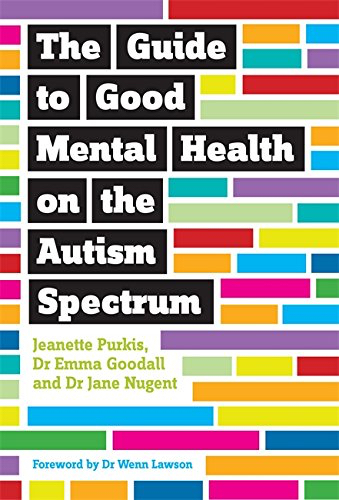
I still think mental health clinicians could benefit form more understanding of autism and neurodivergence. This is an ongoing issue. In this space knowledge = power and autistic people accessing mental health services would benefit from those treating them knowing more.    People should feel confident to access mental health support not anxious and frightened they will be discriminated against. I have a book on the topic (I’m Yenn – I have a book on most autism-related topics!!) This one I coauthored with Dr Emma Goodall and Dr Jane Nugent. It covers a range of issues around autism and mental health including accessing services. I would love for mental health clinicians to read our book as I think it would help them to work more effectively with autistic people and deliver services which are inclusive and respectful – and beneficial! I liken poor treatment by mental health workers as being like calling in the plumber to fix a dripping tap and instead of doing this they break your toilet! So mental health clinicians need to metaphorically fix the tap and please don’t break the toilet!

About rejection sensitivity – not a flaw or failing

I have been working on an area which is relatively new to me – Rejection Sensitive Dysphoria, or rejection sensitivity. What is this you ask? Well, a quick Google tells me that: Rejection sensitive dysphoria (RSD) is when you experience severe emotional pain because of a failure or feeling rejected. This condition is linked to ADHD and experts suspect it happens due to differences in brain structure. Those differences mean your brain can’t regulate rejection-related emotions and behaviours, making them much more intense. 

Thanks, Google!

I actually think it isn’t just ADHDers who experience this. I think a fair number of autistic people – and others – probably do too.  I myself am an AuDHDer and I know lot of others when experience this too.

Actually, the description of RSD sounds so like me you wouldn’t believe it! I am terrified of criticism and feedback. Receiving constructive criticism is one of my absolute least favourite things! It makes me stressed, catastrophise and makes my self-esteem take a nose-dive. I don’t even like waiting for what I am fairly certain will be positive feedback! And making errors and mistakes fills me with existential dread. While part of my message as an author and advocate is for people to make positives out of failure and setbacks, I am not always following my own advice. It makes professional employment very challenging – and was a large contributing factor to me leaving one of my previous jobs.  

A lot of people don’t understand this condition. They see it as a character flaw or something which can be changed through willpower alone. However, I know that I cannot change this part of being me just by applying some positive thinking – if I could I most definitely would as rejection sensitive dysphoria is very unpleasant and potentially very limiting.  It also relates to people pleasing and other attributes often viewed as a character flaw or failing.

I can’t speak for anyone else, but I actually quite like my ADHD as it involves lots of really nifty attributes which make it possible for me to do the things I do. However is RSD is part of being AuDHD it is a part I would gladly do without!

Rejection sensitivity is a relatively newly described experience. Just like ten or fifteen years ago people said that ADHD and autism were not actual things but excuses for poorly behaved children or rudeness, so too RSD now is often viewed that way. Wouldn’t it be nice not to have to justify yourself as a neurodivergent person!!

RSD impacts a range of settings and relationships. The more obvious ones are in employment and education as these involve performance discussions and feedback on assessments. These things provide RSD with a wonderful opportunity to be unpleasant to whoever is experiencing it. However, it also related to friendships and relationships. I had an absolute doozy this afternoon. I have been working closely with some people. They are lovley and I am really enjoying working with them. They sent me some messages which I didn’t get to until today. I responded and waited, and they didn’t respond. My first thought was that I must have upset them or done something wrong. When they did contact me, they told me they were at an event interstate and hadn’t seen my messages! This made sense and was a much more likely explanation than me doing some dreadful thing, offending them and them ghosting me! I kept trying to address my anxiety and say to myself that there was a reasonable explanation, and I couldn’t think of anything I had done but the experience was very real! People pleasing is something people with RSD are often told they do. Worrying about getting it wrong combined with communication differences in autism and ADHD make it a real issue.  

I used to have a job with managers who didn’t like me much and were quite critical o regular occasions. The amount of negative feedback I got was immense and had a huge negative impact on my sense of self and my confidence. I was told that my trouble with feedback was basically an affectation, and I was being deliberately difficult. I left that job because I figured no job was worth constant misery and stress. These days I mostly work for myself, and it is lovley. I think employers and educators particularly need to understand what RSD is, how it impacts people and know that it is not a flaw or failing. It ties in closely with other kinds of anxiety as well as low self-esteem and impostor syndrome. It is not one of my attributes that I view as a positive. Quite the opposite. If there was a cure for Autism or ADHD I would not take it but if there was one for RSD, I would be lining up all day to get it! And also, when I am struggling with this I reflect that cats do not judge, blame or give any kind of critical feedback. If in doubt cuddle a cat. Actually, I think dogs are pretty good at this too.

Rejection sensitive dysphoria – what it is, what does it feel like and why people need to know about it  

I recently discovered something which made a lot of sense to me and which I wished I knew a long time ago. This is something called Rejection Sensitive Dysphoria (or RSD). Basically, it means that feedback can be experienced as a traumatic experience. People with RSD often become ‘people pleasers’ in order to avoid criticism. It can impact across many domains of life, such as in intimate relationships and friendships and in the workplace or in education.

RSD is apparently more common amongst ADHDers and in my own anecdotal experience AuDHD folks too (i.e. people who are both autistic and ADHD – which includes me). RSD can make social situations very stressful and result in people being withdrawn socially and being perfectionists and worrying about making errors. I had a job once where my manager had a lot of mostly quite difficult feedback for me, and I got so anxious that work went from being one of my favourite activities to being one of the least! I left that role and felt a lot better, but the experience had an impact on my confidence and mental health which took a long time to recover!

These days I tell any new managers that I have RSD and what it means for me at work. Being aware of the issues is helpful and explaining what it is to people that don’t know is also helpful.

I think RSD is related to anxiety – or maybe it can be seen as a trigger for anxiety and self-doubt. For me it is quite debilitating. It makes me afraid of situations – like performance discissions at work or evaluations of my presentations. It doesn’t matter if the feedback I am getting is positive, the very process of evaluation and telling me what is going on – even if it positive – causes high stress. My experience of RSD is similar to a trauma response. It is not a flaw or failing and it needs understanding rather than judgement. I have been criticised as being a ‘snowflake’ and being ‘unable to manage your emotions’ in the past due to my RSD. This kind of response is not only unhelpful it is also hurtful and not appropriate.

RSD is a relatively new thing in terms of it having a definition and name, but I think it has always been around. People need to understand about what RSD means – and especially managers in the workplace and teachers and tutors in school / university / higher education.

These days when I start a new job, I tell my manager about my RSD and explain what my experience of it and my needs around it are. It can be the source of criticism a being seen as some kind of character flaw which is unhelpful and unfair. I cannot make myself stop having RSD no matter what people say but I can build my confidence and competence if I am supported appropriately and understood! RSD can cause significant anxiety and feeds into processes of anxiety like rumination and catastrophising.

I try to address my RSD issues in a number of ways. I try to ensure that I am prepared for feedback before it happens as far as possible. I have been known to take a support person into meetings which I fear will involve harsh criticism and I try to keep an open mind about feedback such as when one of my talks has an evaluation at the end! In fact, it is rare for me or receive negative feedback for my talks or for my paid work at the moment, but I still worry!

I undertook ‘people pleasing’ for many years. I was terrified of confrontation or criticism from friends, partners – or anyone! I did everything I possibly could to avoid arguments. I am ashamed to say that I often wouldn’t challenge a friend or partner even if they were saying bigoted or disrespectful things. The issue of being challenged or criticised outweighed my need to challenge unethical or hateful comments. Even now I struggle to challenge people who say disrespectful things. I fact I think I solved these issues by only having respectful and inclusive people in my world!

People pleasing is a big issue. I know it has been and still is for me! I also think that people need a greater understanding of RSD, so they don’t think someone is being overly sensitive or that they are somehow deficient in ‘social skills’. More people knowing about RSD would be beneficial because it would mean that people can make allowances and view people from a kinder and more respectful perspective. Greater knowledge would also enable people who have RSD to understand that they do as I suspect a lot of people with RSD don’t know about it yet and it is likely causing a lot of stress and misery.

I am grateful to have my RSD identification as it allows me to understand myself better.