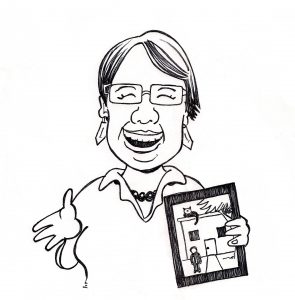
Patience, uncertainty and peace – one year on

I wrote the post below around a year ago and came across it in my travels. I thought it might be nice to reflect on it and what has actually happened in the past twelve months in relation to my career…

I am delighted to report that the second scenario in my previous post appears to have happened – I now have (more than) enough work, have even better savings and am happier than I was in my 17 years in the public service. I hardly ever worry about my future now. I know I could get another job without too much trouble and I am very capable. It took a long time to get to that point, but I am very glad to be there now.

So I guess I did learn patience to some degree. I am in a better place mental health wise than I have been in my entire life and one of the main contributors to that is my being self-employed. When I left the public service in 2024 I was so anxious about not being able to support myself but here I am now not only supporting myself but having a larger income than I did as an APS level 6 officer in the public service and I am happy. Go me!

I would never have expected the outcome I got. My anxiety levels are so much lower than they have been in the past. I love my life at the moment and my career is a key part of this. I spent 49 years being highly anxous all the time about pretty much everyhting. These days I still have problematic anxiety but to a much lesser degree.

Uncertainty, patience and anxiety. (May 2024)

I am not a patient person. Anyone who knows me knows that. I want things done NOW!! Waiting for emails from prospective employers can fill me with immense anxiety and I struggle and have to distract myself by doing something other than thinking about whatever I think needs to happen. It’s funny because while that is the case for some things, for others it is a case that I could happily wait until the end of time. Odd this being human bizzo! (and I am delighted that Word accepts the term ‘bizzo’ and doesn’t think it is a typo!)

I suspect patience is a thing I could learn. Maybe I am learning it? Who knows.

Patience ties in with thoughts of anxiety around uncertainty. As an autistic person – and an ADHD person for that matter – uncertainty is not my friend. It usually goes from being aware that something is uncertain to worrying about the uncertainty to catastrophising about the absolute worst thing that can happen. This process can take a matter of seconds.

People often say I am good at having contingencies and working out my plan for the future. The next paragraph is an example of what others think is me planning well but which I actually know is me catastrophising…

  1. I am a small business now and I have a mortgage
  2. I currently only have one day a week of regular work and the contract for that expires in May 2025
  3. I have enough money coming in from my business at this point but there is a possibility I will not get enough work and need to use my savings to pay the mortgage
  4. My savings will run out, nobody will want my services as a business and nobody will want to employ me
  5. I will run out of money
  6. I will have to sell Yennski HQ
  7. I will have to move in with my parents or a shared house and I will need to give up my kitty
  8. I will be miserable, unable to work, unwell with schizophrenia on an ongoing basis and die unhappy

This process goes through my head a lot more times than it should.

However, a person can look at uncertain situations and think about the potential for either a negative or a positive outcome. So instead of the scenario above I could say:

  1. I have a small business and a mortgage
  2. I am currently earning enough money to support myself
  3. If I need more regular work I am highly employable and some organisation is bound to want my expertise in their company
  4. I should be able to stay at Yennski HQ for as long as I choose and keep my kitty
  5. I will die at a good old age, fulfilled and happy, surrounded by family and friends – and cats – and will leave a wonderful legacy.

I do wonder why my brain so often goes to the first scenario. I think I might be hard wired to worry and catastrophise and see the negatives. I don’t want to and suspect it might be possible to alter that initial response to uncertainty.

For me at the moment it is all about managing uncertainty, altering my focus and approach to things and practicing patience wherever I can. I suspect these are ongoing skills that will hopefully improve over time. I think I need to take a leaf out of Sunflower the kitty’s book – she is very good at waiting for things and is rarely anxious. And despite being a cat I doubt that she ever ‘cat’astrophises!  

I do hope I learn how to manage uncertainty better, limit catastrophising and build my ability to wait for things patiently. I guess it is nice to get to work on self-improvement!

Worlds of work: Wonderful and horrible

Content warning: mental health, bullying

In 2013 I wrote a book called The Wonderful World of Work. It was aimed at autistic teens and includes a bunch of practical advice around employment. The day it was released someone posted in response that the world of work for autistic people was anything but wonderful! After my initial stress at the very first review of my book being negative, I reflected that it is 100 per cent true that work can be not wonderful at all for autistic people.

I was unable to work at all between 1995 and 2003 due to mental health issues and anxiety around working. It took me a long time to build my confidence to the point hat I was able to work. In 2007 I scored a professional role in Canberra and this was life-changing. I had been a criminal and on the disability pension for many years but I secured ongoing employment. It was amazing and I felt my world of work was absolutely wonderful.

Just over a year ago I left my job of 17 years to go out on my own. My colleagues all congratulated me and said how amazing it would be to work in my own consultancy business. They also said I was ‘brave’ – this caused me a lot of stress! I actually didn’t choose to leave per se – I resigned after prolonged bullying and gaslighting at work. If I hadn’t left my job, I suspect my mental health would have really suffered. I actually feared for my safety. Everything about work caused stress.   Going it alone was utterly terrifying. The only regular non-work income sources I had at that point were my books and talks. I contacted every employer I knew and asked for work. I applied for a number of ongoing part-time roles as well. Somehow, I had enough income to support myself even before I landed my current main sources of income – Access manager and project manager at Rebus Theatre and Deputy CEO – External Relations – at the Disability leadership Institute and academic researcher with the Olga Tenison Autism Research Centre.

In my process of looking for regular work I discovered I was very employable. I know, hey, amazing! My 17-year career in administration and my many books and presentations, membership of boards and committees, awards and management experience make me extremely employable. When I left my former job I lacked confidence and thought I would struggle to find work. I had to get some clearances in order to work (Police check, Working with children check, that kind of thing). This always fills me with high anxiety given my somewhat dubious past! Thankfully I have always been able to get these things as I am considered a very low risk due to the length of time that has elapsed since the legal issues and the fact that I am now an absurd overachiever and public figure and so forth! However, this process always stresses me out and particularly when the checks are a prerequisite for so many jobs.

In January 2025 I applied for six jobs. I was interviewed for four of these and found suitable for three including my current role as a Deputy CEO at the Disability Leadership Institute. Now I think that if one of my jobs finishes that looking for a replacement role will be more of an inconvenience than a source of high anxiety given how highly employable I now know I am!

I now have 11 regular clients / employers. I am one very busy Yennski but a happy and wealthy Yennski! I actually made more from my hybrid business employment arrangement than I did in my former full-time role!

The bullying really took its toll. My confidence around my employability went through the floor and my impostor syndrome had a field day! And this doesn’t even start on my rejection sensitive dysphoria. When bullies use your performance as the driver for their poor behaviour and you have rejection sensitivity, are a workaholic and perfectionist it is just cruel and mean.

Looking back, I think I probably owe the bullies a debt of gratitude. If they hadn’t attacked me, I would be in a job which is not a passion, and I would have missed out on all the cool things I have done in the past year. I often wonder if I will see the bullies down the street. If I do, I will have to say ‘hi there. How’s the bullying going? Oh, and I am doing loads of cool things at work now and also, more importantly, I am actually happy!’

These days the only work stress I have is an occasional flare up of my rejection sensitivity and worrying I have done something wrong even if I haven’t as well as uncertainty around income sources going forward. That is, it – two minor and manageable issues. Much better than being highly anxious every time I saw an email from my managers, having frequent very stressful meetings and being told I was getting everything wrong and consequently wanting to die. Yup, I’ll pick the work situation I have now thank you! My current world of work is amazing and indeed quite wonderful.

Denial and acceptance

Content warning: mental health and brief reference to sexual abuse

These days I am fairly well-known as an autistic person. I have no issues with this. In fact, I am very happy with that particular part of my identity but that was not always the case. I was diagnosed as autistic when I was twenty. I was a prisoner – long story and there is a book about it if you want to find out more about that! Anyway, I was doing a pretty good job of masking. I was actually so good at masking I believed myself to be the person I was presenting to the world – in this case a scary criminal! My parents heard about this Asperger syndrome thing and thought it sounded like me. They sent a psychologist to visit me in prison to conduct an autism assessment – the awesome Vikki Bitsika. Although I didn’t think she as awesome at the time!! Vikki gave me a diagnosis and said I fulfilled ALL the diagnostic criteria for what was then called Asperger Syndrome.  That was a pretty categorical diagnosis but I saw the autism thing as being my parents making excuses for my poor behaviour. I also thought it was a diagnosis of nerd and I wasn’t a nerd – I was a scary criminal!! Deep down I know I was autistic, but it was so raw, so personal that I couldn’t accept it,

Most of my young adult life was spent masking and in an attempt to be socially accepted. I hated who I was. I experienced a lot of trauma as a child and teenager including bullying and sexual abuse. This left me feeling very negative about myself. The last thing I wanted was autism! To my mind being autistic was all the things I was trying to avoid in life I struggled to even watch content about autistic people. And you know what? I actually still do, especially when it comes to media and popular culture! I don’t generally look at programs like The Assembly – over thirty years after my diagnosis. This can have an impact on my being an advocate at times, although I am OK with books and conference content and research papers and so forth.  

I spent seven years in denial about my autism diagnosis. The point at which I accepted it was at a time when I had finally worked out that I was OK as I was and that I didn’t need acceptance form others to validate myself. I realised that I was worthy and of value just as I was and that there were finally people in my life who liked me for who I was. I no longer needed to belong to a group to be accepted (criminal, socialists, drug addicts and all the other groups I had attached myself to garner acceptance as a teen and young adult). At the point that I knew I was valid as I was, I was prepared to entertain the concept that I was autistic.

Despite accepting my diagnosis, I still struggled with it. I didn’t tell many people, and I was happier telling people I had been in jail than that I was autistic! A couple of years later I met advocate and author Polly Samuel and did something life-changing – I wrote my life story, and it was published. It’s called Fining a Different Kind of Normal and it changed my life.

After my first book was published, I became an autism advocate, I didn’t really mean to -it just happened! That was 20 years ago, and I am known around the world as a neurodiversity advocate. Definitely not in denial anymore and not wanting to be accepted due to my membership of a group!

There is another denial story in my life, one that has lasted a very long time. That is my schizophrenia diagnosis. I received this in 1995 – one year after my autism diagnosis. I have never properly accepted this. If I am being logical, I clearly have schizophrenia, but I am not always logical! I have taken anti-psychotic medication for 30 years. I have been on clozapine for five years, and there is only one reason people are prescribed clozapine and that is for treatment resistant schizophrenia. I have had many psychotic episodes in the past 30 years and spent a lot of time in psychiatric hospitals. I calculated this a while back and worked out that I have spent around 3 years in hospital, 3 in residential mental health care and 4 in prison! This means I have spent 20 per cent of my life in institutions. You don’t have all those things without their being a reason for them!

Because I have an atypical presentation of schizophrenia it gets me wondering if it is a misdiagnosis. I always doubt it and then have to tell myself that doctors don’t prescribe potentially life-threatening medication without good reason! The other thing I realise was that before I took clozapine I was terrified of ghosts. I couldn’t sleep in a room with a mirror because spirits would be in the mirror. I would stay under the covers even in summer because of fear about ghosts, and I never left the wardrobe door open! Since I have been on clozapine this has not been my experience. I now recognise that those beliefs I held around ghosts are called delusions and are common for people with schizophrenia.

So, I am autistic, and I have schizophrenia and that is OK. Denial often relates to ableism – particularly internalised ableism – and fear of being socially excluded or judged. It is good to embrace your difference and uniqueness and it is good to understand yourself as you are.

Yenn self-portrait created in hospital in 2019

Like a boss! Being an autistic manager  

I give talks on autism and employment a lot. I have probably given around 100 talks on autism and employment and almost always the expectation from those who book me to speak on this topic is that autistic people in the workplace are employees, not managers.

I have recently become an executive. An autistic executive?? Is this even possible you might ask? Actually, it is, and I think I am a pretty good manager and executive. I am also a project manager in another role and guess what? I manage staff! And guess what else? The project is going really well and my relationship with my staff is very positive. I know there are a lot of other autistic managers out there, but the assumptions always seem to be that if we have jobs that we are in junior roles, and also that we don’t want, need or deserve career advancement.

When I joined the Australian Public Service in 2007, I was very ambitious. I wore a suit and everything! At the end of my graduate year, I secured a promotion. I was delighted. I wanted to get as high up in the public service chain of command as I could. At the time I was sharing a house with someone who was a bit of a bully! When I got my first promotion, she told me that autistic people couldn’t be managers. If someone said that to me now, I would tear them a figurative new one but at the time I was lacking in self-confidence and so instead of responding with assertiveness and autistic pride I actually took her disrespectful and ableist comment about my management capability based on my neurotype  on board. This meant that for the next 16 years that I was a public servant I was convinced I couldn’t manage staff.

In 2024 I left the public service. This was one of the most significant changes in my life. I went from being extremely unhappy at work, and full of self-doubt, to where I am now. When I left my previous role, I was filled with anxiety and low self-confidence. I assumed that I was incompetent and a poor performer. However, I fairly soon realised that I was not those things and that my lack in confidence was due to issues with others at my former workplace and not anything to do with me at all.

In less than a year I have gathered myself 10 regular sources of income, have become a project manager and an executive and I am now so sought after that I had to turn down work opportunities because there were not enough days in the week to accommodate all the work that people wanted to give me!

Over the years I have come across autistic managers and executives and it is a lovely thing to see. I really wish it was more common. I had one manager in the public service who I absolutely loved. I showed her a copy of my autobiography and she said that she saw a lot of herself in it and I could see why she would as she definitely seemed to be autistic ‘family’. When she left my team, I gave her a parting gift which was a briefing on departmental letterhead which looked a bit like this…

Title:

Susan is leaving

Issues:

  • I will miss her
  • Work won’t be the same without her

Background:

  • Susan is an amazing manager….”

And I then went on to list all her awesome qualities. We both thought it was wonderful. This manager and I ‘got’ one another.

The assumption that autistic people can’t manage staff is a really unhelpful one. I think it is rooted in that infantilisation thing where we are seen as children or as adults that cannot do much and certainly can’t be independent or accomplished at things like work of heaven forbid, manage a team! I think the way work is set up a lot of the time makes it difficult for autistic people to thrive and those keen on attaining a management role can face additional barriers to those who want an entry level position or are not interested in career advancement.

I actually really enjoy being a manager and an executive – and not just because it sounds impressive. Having autonomy over my work and having that level of responsibility is wonderful thing. And the fact that I am challenging assumptions and ableism and getting paid for it is also pretty cool!

I think there needs to be more content on and for autistic and neurodivergent managers…. Oh dear, I see another Yennski book on the horizon!! And a couple of amusing observations on books and jobs…. Firstly Yenn, please let someone else have a go with the books – 18 is a big number! And secondly, Yenn you are probably causing most of the unemployment in Canberra by taking all the jobs!! Seriously though, this is an area in need of attention and a need for changes in thinking, perceptions and assumptions around autistic and neurodivergent people at work.

And I will finish with an assertion that there is no ‘better’ kind of employment setting. Being a manager is not necessarily somehow essentially preferable to being an entry level employee or being unemployed. These considerations are dependent on each individual, their needs and wants and circumstances. Judgement on the basis of employment type or level – or unemployment – is not OK and is not helpful. Autistic people face discrimination and ableism at work and have a significantly higher level of unemployment than most others – meaning autistic people are more likely to face unemployment as a structural barrier in society – so blaming or judging them for this is very much not OK! In fact most times judgement for any reason isn’t particularly helpful!

What’s in a name? Diversity, identity and responding to bigots  

I am Yenn. However, I have not always been Yenn. For the first 44 years of my life, I had a different name – a name that I did not really like and didn’t feel like me. It never really occurred to me to change my name. Then in 2018 when I was 44, I came out as being non-binary gender. This was A Big Thing for many reasons. It went to the heart of who I am and how I see myself. One thing which came up almost instantly was my problematic name. My dead name had  an ‘ette’ at the end, which in English at least is a feminine descriptor. (And in case you don’t know, a ‘dead name’ is what trans folks tend to describe the name we were given at birth and which we have since changed).

When I came out, I did some serious thinking about how to change my name but nothing I came up with worked. Eventually I decided to leave it with my subconscious to work out my new name. In February 2019 I was sitting at my desk working and a thought popped into my mind. “ooh” I thought, “Yenne.” I wrote it down and it didn’t quite work. I tried again – “Yenn”. Yup. That’s the sweet spot! I have been Yenn ever since. Initially it involved a lot of bureaucracy. I changed my name on social media, at work on my bank account, with my publishers and of course with friends and family.

One amusing thing happened the day after I worked out Yenn was my name. I was helping my friend and author colleague Graeme Simsion launch his book the Rosie Result. I had told Graeme my new name prior to the launch. He remarked that it was very funny because at the launch event he called my name, and I didn’t look around at him! And it did take a while to take it on board.

My name has a few meanings. I unpacked this almost as soon as I came upon my new ‘me’. The first is about gender of course. Yenn – in Australia at least – is not a gendered name so it is a very suitable name for an A-gender and non-binary person! It also means to yearn in old fashioned poetry, and I have spent much of my adult life on self-reflection and finally it includes some of the letters from my dead name so I can remember the past if I want to. Yenn is a perfect name for me.

People often ask me if Yenn is my ‘real’ name. Well yes, and yes. I legally changed my name 6 years ago this month on 20 May 2019. So, it is my legal name and anyway even if it wasn’t then it is the name I chose for myself and as such is valid too. It is not OK to challenge a person’s name and often relates to bigotry of one sort or another, be that transphobia, racism or Islamaphobia.

Transgender people often express that they love my name. I love it too. It is one of my favourite things about me. It also lends itself to nicknames. My faves are Yennski, Yennie, my Yennie friend and Yenns. It also lends itself to amusing use of language – such as Yenniverse, Yenniversary, Yeme, Yennify or a big Yennski Yay!! It’s a pretty cool name. It is also a core part of my brand as a small business and I’m sure it results in greater levels of engagement.

Some thoughts about names and gender

Always use a person’s preferred name. Not doing so is similar to misgendering a person (i.e. using the incorrect pronouns). This is an area where intent is very important. Intentionally doing this is rude, disrespectful and demonstrates bigotry and transphobia. However, if you do it accidentally, just apologise and try not to do it again – and don’t make a big deal of it.

Changing your name is often peart of a range of things which come under the umbrella of affirming gender. This can involve surgeries, changing pronouns, changing the way you dress, taking hormones, growing or removing facial hair and changing your name. Affirming gender can be a time of joy and discovery but it can also be very challenging and intense. Bigots may use someone’s gender affirmation as an excuse to be hateful and even violent. If you meet someone who has recently changed their name in relation to affirming gender, please keep these things in mind.

A name is a deeply personal thing. I always tell people that if they want to change their name that they can. The process is not too onerous, and, in my experience, it is far worth the effort. My life changed when I changed my name. I became more confident and positive about myself. For me it was also closely related to my gender identity. I came to my self-knowledge and my name was a core part of that. As such my attitudes around something as key to my identity as my gender and my name all sort of get together and have a pride party in my soul!

And to any bigots out there, just stop it! Transgender people – and nobody else for that matter – need or deserve to be hated and discriminated against. We have the right to acceptance and respect and support and kindness. And if you don’t like me because you are transphobic, well:

  • I am angry because bigotry is never OK, and we don’t deserve it
  • I am confused because I don’t I understand why my gender identity is anyone’s business other than my own
  • I am sad because I am a very loyal and kind friend with lots of insights and amusing anecdotes and you are missing out on those things
  • I am hopeful for you that you will change your thinking and realise that hate isn’t OK. I know this can happen because I have experienced it happen.   

And I am quoting myself from a disability context here but I think it relates … ‘It is the same as with  anyone else – just be decent’

Yenn at Mardi Gras in Sydney in 2019

One year on – reflecting on employment, small business and being ‘brave’

One year ago, on 10 May, I left my job of 17 years to start a whole new adventure. I am not going into the details of why I left but suffice to say I was very unhappy in my job for a number of reasons. It was doing damage to my mental health – which is usually pretty fragile without any external prompting! I made the decision to leave and it turned out to be one of the best decisions I have made – although not without some issues.

When I left, everyone at work told me I was ‘brave’ and how they wished that they could do similar things. I basically went out into business as a consultant, advocate and coach. When I started the only regular income I had was my books – usually less than $10,000 per year so not something I could live on for very long. I also have a mortgage and at around the time I left work the interest rates kept going up which made me very stressed. People told me I would be OK, but it was a scary place to be.

For the first few months I managed to land some projects which kept me going but it was all very precarious. Then in August I started regular work with a theatre company which was amazing. I was hired as an accessibility and inclusion officer for one of their awesome projects and then a few months later I was asked to manage another project for them. My dad always tells me how much he loves me working in theatre. I am not actually a theatre professional, but I am an experienced accessibility consultant and project manager. I really love this role and hope I can work there for a long time to come.

After that, I was getting regular income, but I wanted more – mostly to address my anxiety around income! In January of this year, I applied for six part time jobs. I got interviews for four, was found suitable of three and got my most amazing job in the world – as one of two Deputy CEOs with a Disability organisation who I have worked with over the years. Not only is this regular income it is basically the best job ever. I get paid for making a difference and changing the world doing work which closely aligns with my world view and approach to life. I think I may have died and gone to work heaven!

The only issue for me with all of this is the uncertainty. Most of my jobs are for a few hours a month and are casual or once-off roles. Some of my jobs are dependent on timings and external things, like access to funding. I am autistic which – for me at least – means uncertainty is not really my friend. So, in order to not spend all my days stressing about where the income is coming from, I have needed to build strategies to address that anxiety. I have definitely not perfected this yet, but it is improving.

One of my non-autistic friends who has a business said to me that it took them three years before they stopped worrying about where the money was coming from, so I try and keep that in mind when I start to worry. I am aware that new business will usually fail in the first two years if they fail so I am exactly halfway there…. And so far, so good!

I am actually co-directing a research project with Latrobe Uni looking at autism and entrepreneurship which is very interesting. I have been interviewing autistic business owners about a range of things, mostly focused on their wellbeing. I think I should interview myself! That is one of my other roles – that of an academic. I am working for two different universities on different things which is cool. …And if you are an autistic entrepreneur and would like to be interviewed for the research then please get in touch 

When I left my job last year, I had anxiety that nobody else would employ me. This has not been the case. If anything, I have discovered that I am immensely employable. Apparently writing 18 books, giving two TEDx talks and being on a bunch of boards and committees, receiving awards and having work experience in a range of roles impresses hiring managers! Why knew?? And the things I have done in the past year have if anything increased my level of employability. Despite this I periodically get filled with anxiety and thinking what if NOBODY wants to employ me and I will have to sell my house and move in with my parents! Thankfully this concern seems to decreases with passing time.

In 2007 I moved to Canberra for work. I was in receipt of the disability support pension at the time and had been for the preceding twelve years. My world changed in a big way. For many years my high levels of perfectionism and anxiety meant I couldn’t do any paid work at all. Now, less then 20 years later I probably have more work than I need! And I utterly love it. I often find myself sitting at my laptop thinking that I could keep going all night! (Don’t worry – I don’t go all night!)

I know I made the right choice a year ago.  I followed my heart and ended up with some amazing things to pass my time. The people  work with like and value me and my good work and I spend my time changing the world. Lovely.  

Yenn’s first book and their lizard tongue  – How unexpected experiences can influence change

On this day precisely twenty years ago I was an anxious Yennski…. Well, that wasn’t exclusive to my thirty-year-old self, but it was a particular kind of anxiety. I guess it was  ‘good’ anxiety. What was I worried about? I had just sent my first book – or what would become such – to my mentor Polly’s publisher, Jessica Kingsley Publishers. The book was my life story up until then. It was the story of an autistic person brought up in non-conventional religion, who became a communist, a criminal and an artist. A person who at the time they wrote the book had overcome drug addition, been a prisoner and an inhabitant of many mental health programs. A person who had been misdiagnosed and all that went with that, a person who had a mix of optimism and positivity combined with self-doubt and impostor syndrome. This little Yennski person had no idea what path this book would take them on.

When I sent it off, I actually doubted that anyone would want to publish my book, but they did. And thus began my twenty-year relationship with my publisher. They have printed a further 12 Yennski books and a number that I have provided a chapter for. I love to write. I mean of course I do – I have two blog sites with 700 or so posts in them. I even have a book of my blog posts in it with Lived Places Publishing! Writing has always been something I enjoy and which gives me meaning. I am that oh so common thing that is the creative autistic person. We are everywhere!! And I make art as well 

My first book did more than make me happy and fulfilled. It completely changed my view of myself and where I felt that I fitted in the world. Just after it was published, I was asked to be interviewed on BBC UK radio’s Women’s Hour. I was living in public housing, so I had the odd situation of being picked up by a chauffeured car from the BBC from my public housing estate. I imagine that was probably the first time the driver had picked up someone for an interview from where I lived, and I am certain I was the only published author from my estate at the time – although there may have been others since. It never pays to assume about a person’s capability or achievements based solely on their address or even their criminal history. I mean look at Jean Genet – a homeless criminal and one of my favourite authors ever – and I guess look at me too!

There are a few things in my life which seem destined buy a positive force – be that God or whatever it might be. I don’t know about theology but I do reflect on those kinds of things. Some events and situations have conspired to change my life and my view of myself. One was the first book – of meeting Polly when I did and us becoming friends and her significant positive influence in my life. Another one might seem odd, but I still see it as being something which had it not occurred, I would not have taken the path in life that I have. This thing happened in 2000. I was a very recently released ex-prisoner, and I was living in a residential service for people with borderline personality disorder. I am fairly certain I do not have this actual condition, but it is a common misdiagnosis for autistic people. When I was in prison I was medicated to a huge level. The chemical straitjacket they call it – keeping people so medicated they don’t fight back or make trouble. It was definitely a strategy favoured by prison authorities! One of these medications gave me a movement disorder called tardive dyskinesia. This meant I would involuntarily poke out my tongue like a lizard as I spoke. I was mortified by this and felt I couldn’t participate in anything social – like work or study – with this happening. The doctor at the service I was staying in sent me to a movement disorder specialist doctor and they changed my medication, and it stopped. Sounds simple but I later learned that most people with that movement disorder never recover from it. It is permanent. Had that been the case I imagine that I wouldn’t have enrolled in university. My life would have been limited by my self-consciousness and I probably would never have set out on the journey that I did.

I think there are a lot of things like that in life – not just my life though. Hindsight and reflection are the best teachers. My friend and new manager talk about ‘tree rings’ of experience. We do something and learn from the experience, adding to our ‘tree.’ Rather than thinking of making the wrong or right choice or making mistakes, we see choices and what they result in as opportunities for growth and understanding. I like this approach. I think if I see failing or making a mistake as a means of building wisdom and understanding – well let’s just say I must be pretty experienced!!

Back to my first book and the past twenty years… I became an advocate, an influencer of sorts and an expert (I hate that word but grudgingly admit that I probably am one). I use my experience to support my understanding of others, and particularly my work in the advocacy space. I never had – and probably will never have – the high profile of some other autistic people. I used to want to – until I realised that the more followers you have the more trolls you have!! There is a lot to be said of being a quieter voice. I love my life now and when I think about it, most of the life I have now I owe to my first book and the amazing mentor who supported me to write it. Polly is no longer with us sadly but her legacy lives on in myself and her many other proteges.  On reflection my ‘tree’ has many rings and each of them illustrates experience – be that difficult, traumatic, enlightening or transcendent experience.

I think this little person has made a LOT of decisions between thne and now (and yes it is Yenn)

What is anger? I actually don’t know!

CW: bullying

I recently did some personality, mental health and executive functioning assessments with my lovely art therapist. Among other things, these identified that I don’t really ‘do’ anger. This was not a surprise. I have never done anger. It is an emotion that I don’t really experience. I don’t think I know anyone else who doesn’t feel or express anger. It is one of those little quirks that make me Yennski!

I guess it sounds good not to be angry and in a number of ways it is.  I don’t hold grudges and you will never find me engaging in a vendetta! However, anger does serve a purpose. When I was a child and teenager I experienced pretty significant bullying at school. I was the least liked child in the place and definitely the most hated – an ‘honour’ I shared with a fellow student who was gay and possibly autistic (I avoid retrospectively diagnosing folks as I am not a diagnostician, and my reflections from 35 years ago probably don’t count as a very accurate diagnosis anyway!)

School was trauma heaped on misery but not once did I get angry. I just took on board all the hate and bigotry and I guess I was sad and stressed but never angry. It didn’t occur to me that the bullies were in the wrong or that I could retaliate. I just accepted their judgement which I suspect contributed to the rejection sensitivity, low self-esteem and impostor syndrome that I experience now, almost 40 years later. In this situation a bit of anger and blame against my tormentors would probably have been more helpful than turning it all in on myself! The appropriate response – or one appropriate response I guess – to this kind of abuse is anger and wanting to hold the perpetrators to account.

Between the ages of 15 and 20 I was a socialist. Socialists were all about anger – anger at the system, at the billionaires and warmongers and pretty much everyone that wasn’t a ‘worker’ or student – and even then not all of the members of those groups!! I was fine with the attitudes and beliefs around the system being to blame for a lot of mystery and exploitation and discrimination, but I never felt angry about it! I remember thinking I must be a deficient sort of socialist to have no anger. I mean our party logo was a red fist on a white background – symbolic of using violent revolution to overthrow the rotten system and replace it with something nicer – and if that imagery didn’t portray anger I am unsure what does!

More recently I experienced bullying in a job which was so bad that I had to leave the job to protect my safety and mental health. I was never angry with the bullies – just sad and disappointed and very stressed. I am still not angry with those bullies – in fact I thank them because my employment life now is so much nicer than it was then plus I am earning more money than I did so the joke is on those managers!

I don’t know if I miss anger. I have bever really had it which makes it difficult to miss. I used to think I was deficient by not being angry at things which apparently should engender anger. I don’t feel angry or blaming against criminals – even those who commit horrible crimes. I don’t even feel anger at awful governments and politicians and I don’t feel angry about injustice – despite the fact I have spent over half of my adult life fighting against ableism, transphobia and other bigotry. I feel very strongly about justice and inclusion it is just that part of those strong feelings is not anger. I can’t really be a disability advocate and blame myself for something which I imagine is almost certainly related to my disability! So, I guess this is what I get. I am OK with it, and I now know it isn’t a failing and I am not a sociopath with no feelings – I just have different feelings to others and that is OK too.    

Has anyone seen my emotions? All about alexithymia

I had an appointment with my art therapist yesterday. We had recently done some psychological and personality questionnaires – I love that kind of thing! One of the biggest things to come out was my issue around connecting with my emotions. After I recounted a story about abuse against me in the past, the therapist asked if I felt emotional talking about it. I honestly did not. I am often taken to task around my propensity to talk about dark, negative or triggering things. I actually don’t understand what being triggered feels like. It is not a thing that happens for me. Of course as a public figure this lack of knowing the impact on others of my stories about difficult experiences can be a challenge! I often figure it out only after someone tells me after something I say upsets them, which is far from ideal!

When I think about it, the only emotions I am aware of ever experiencing are anxiety, fear, depression on occasion, a little bit of shame sometimes and even less frequently happiness. My usual emotional state is feeling nothing at all! Emotions are evidently not for me!

I suspect I actually have all the same emotions that everyone else does but that they are dampened by alexithymia (also known as emotional blindness). Alexithymia means I can’t articulate or be aware of emotions rather than having none. I rarely cry and I rarely feel sad or angry as a result of poor treatment by others – although I am susceptible to be bullying and it makes me stressed and filled with shame – it just takes me a long time to figure out what is happening in that situation!

Lots of other autistic people have alexithymia too. It can mean people view us as not having emotions or that we are cold and detached. I don’t think it is that. I have very good empathy (I think!), but it is on a thinking level rather than a feeling one. I can empathise with people but not have any conscious emotions about the situation, but I still care. In fact, one of the other findings from the psychological testing was that I am very kind and thoughtful. It’s just I’m not going to cry if something bad happens – I will reflect on it and feel sad on a thinking level instead of an emotional one.

I think I have a lot of emotions going on below the surface so to speak. I remember many years ago having a book launch for one of my large collections of Yennski books. There are photos of me signing books and looking absolutely delighted. Three days after those photos were taken, I went to hospital for severe depression, and I was there for six weeks! It wasn’t that I wasn’t experiencing the depression emotions, more that I was unaware of them, enabling me to be completely depressed without being aware of it until it was at a very elevated level.

Another thing I have some issues around is love. I have never felt love in the way society says you are ‘supposed to’ experience it. I do experience love but once again, it is more of a thinking love than a feeling one. I usually find when I experience an emotion it is negative, so I am happier when I feel nothing. I don’t miss my emotions because it is so rare that I am aware of them (apart from anxiety which I often feel). My baseline state is being on an even sort of level. For me anxiety is a big worry because in the past every time my schizophrenia has given me a major hard time it was proceeded by high anxiety. So, when I start to get anxious, and it doesn’t go away after a few days I worry that my illness will play up and put me out of action for several months and I will descend into terror and confusion and spend months in hospital – never fun!  

I don’t feel wish to have more connection to my emotions. I am fifty now and this has always been my life, so I don’t know anything different. Alexithymia is as valid an emotional state as people who feel things all the time – it is just a bit different. I am not at all cold-hearted and detached, I just have a different way of experiencing feelings. And if you meet another person and they seem emotionally disengaged it might just be because they have alexithymia too!

Activism and advocacy, self-perception and ‘bolshy’ Disabled women

I am an Autistic and ADHD, non-binary, Asexual activist and advocate who belongs a bunch of other intersectional ‘boxes.’

I find myself reflecting on how I imagine others might see me as a person and as an activist. I am out loud and proud about all my identities. I have a lot of strong opinions and am not afraid to express them. I am extroverted and a ‘big’ person. I consider myself a bit of an alpha human. I am – in some areas – highly confident in my capability. And I get accused of being difficult, rude, blunt, bolshy, a pain and being too ‘woke’. I often wonder if I was a cigs gender, white, straight, non-Disabled man if I would be described like that when I raised an issue at work – or wherever?

People, and especially people that don’t know a lot about transgender experience and identities – assume that I am a woman. There are all these expectations of what women are ‘supposed’ to do, how they are supposed to look. The idea that women are somehow lesser citizens is still around, albeit oftne expressed in more subtle terms than in the past. The other issue is criticisms of ‘political correctness’ and ‘wokeness’. These things are often seen as a problem. I always say why do people have a problem with respecting others. Because the concept of ‘woke’ to my mind means including, accepting and respecting people from different groups. I fail to see how that is a bad thing!

I remember giving an autism talk in a country town some years ago. The organiser of the event was quite problematic in terms of their disability politics – they even asked me what I planned to wear to my talk! (And I was very tempted to say ‘well as I love the beauty of the human form, I will be naked…’) When I finished my talk this woman asked me a question about ‘what would you do about all these politically correct autistic activists?’ To which I responded that these activists were my friends so I would most likely support them and also that attacking ‘political correctness’, to my mind, was essentially attacking being respectful and who would want to intentionally do that?

I am happy to be ‘bolshy’ because we live in an often hateful and horrible world where people like me – and those from other groups – face discrimination, bigotry, trolling and hate and this is Not OK! If by standing up for human rights and inclusion I am being bolshy and difficult, well I will gladly be bolshy and difficult!

Perspective is such a factor in this discussion. I remember being in a conference audience a while back. The conference was around autism and supporting autistic kids. I went to a session and the presenter – who I am pretty certain was not autistic – said a child they worked with was ‘resistant to using the telephone’. I remember wondering if a non-autistic child’s dislike of phones would be described with such pathologising language as the autistic kid’s was? I imagine a non-autistic child would have been described as ‘not liking to use the phone’ – which has a completely different emphasis!

We are now living in a world where being bolshy is definitely not a bad thing and it is actually necessary. The world we live in now is so full of bigotry, transphobia, racism and ableism that we need to stand up for all that is good and inclusive. Don’t be deterred by the assumptions. We need to defend human rights and at this point in time challenging all the hate is essential. The adage ‘evil triumphs when good people do nothing’ is relevant here I think.  I keep this with me in my work and aim to challenge the hate with kindness, empowerment and resepct.

Assumptions are everywhere in this space. I never got the metaphorical email about how Disabled women and gender divergent folks are ‘supposed’ to act – yay to not getting that email because the expectations around how we are ‘supposed’ to behave do not tally with how I want to live my life. If I see prejudice, ableism, bias or hatred I will challenge it as much as I can. I don’t care if that makes me look ‘difficult’ or ‘bolshy.’ In fact, at this point in my life I have stopped giving a crap about what negative people think a lot of the time and I don’t really mind if someone thinks I am being ‘difficult’. Disabled women and gender divergent folks need to (metaphorically) stand up now more than ever. Bring on the bolshy and prepare for me to be difficult I say!