The empathy myth

When I was diagnosed as autistic in 1994 I was told autistic people lacked empathy. Apparently we were cold emotionless robots and unable  to connect to other people. This was very early on in the history of autism so I guess this view might be seen as understandable, albeit wrong. What horrifies me is that 25 years later this view is still around and apparently thriving. 

There is a whole history to the ‘autistics lack empathy’ myth.  It is a very harmful view which sets back the cause of autistic acceptance and pride and perpetuates unhelpful views which harm autistic people. 

There is a clinical theory which justified this view. Thinking which has since been largely debunked around the idea of autistics being unable to form attachments with people. I am not an academic so cannot provide more than a high level refutation to that view but what I can do is share what I know as an autistic person, and as an autistic person who has met and knows vast numbers of other autistic people. My experience as well as others’ demonstrates that the empathy myth is just that.

One of the issues is that autistic people and allistic people tend to have different experiences of empathy. Autistics often experience hyper empathy where we pick up on the emotions of those around us almost as if by osmosis. When I stand near someone who is very sad I often feel their sadness. I once worked with a colleague who was very angry and I could feel their anger coming up the corridor well before I laid eyes on them.  I can tell if there are people in a room with a closed door as I can feel their emotions. These experiences are common to many other autistic people too. You may have a child who is very keen for everyone to enjoy their birthday party. This child may be afraid of picking up on others’ emotions if they are having a hard time and it ruining their experience of the party because people are sad. This kind of intuitive empathy, despite being very common, is not widely known about. I often mention it to other autistic people and they immediately relate even though this is not a concept anyone has told them about before. It can be a really difficult thing to experience the emotions of others around us. I have a mental illness and sometimes have to go to hospital. There is nothing worse when I’m unwell than to be in a building full of people experiencing misery and crisis and hospital is so counterproductive that I now tell my psychiatrist that I would rather be miserable at home with Mr kItty than in a building full of sadness and anger.

One issue feeding into the empathy myth is the different way autistic people view things like body language and eye contact. Many of us get little or no meaning from non-verbal communication. For me I cannot tell from non-verbal cues if someone is upset unless they are visibly crying or displaying their emotion in quite an overt way. In the past this has led to people thinking me cruel and heartless which in fact is not at all true. Like so many other autistic people I am kind and thoughtful and want to help people where I can but if I can’t tell that someone is having a tough time I will not know I need to be supportive. This is one of those misunderstandings caused by differences in communication styles between autistic and allistics. 

In a similar vein there is a mismatch between empathy between autistic and allistic. So while we are lumbered with the idea that we lack empathy, a lot of autistic people see allistics as lacking empathy towards us. The pathologising of autism dictates that this mismatch its usually only seen and written about in one direction but autistics frequently complain of a lack of empathy from allistics. I think this goes to the idea that we communicate in different ways, as if we are from different cultures. It is simply an example of a kind of cultural difference. How often are there misunderstandings between people from different countries because one side has made assumptions about the other? Well I suspect that this is what goes on in ‘cross-cultural’ type exchanges between autistic and allistic.

One thing I will say is that I am yet to meet a parent – autistic or allistic – of an autistic child who thinks that their autistic child lacks empathy. Autistic people can be the most thoughtful and considerate people. We so often care about how someone is feeling and want to be helpful. To me that is part of what makes the empathy myth so upsetting. Our good deeds and good intentions are so pathologised that the fact that we care and want to help is eclipsed by that pathology. 

I really hope that the empathy myth becomes a thing of the past as soon as possible. We do care, we are not robots, we just do empathy differently. Another case of different not less. Let’s work to get this myth firmly debunked because it is not helping anyone.

Can we please just ditch the myth that autistc people lack empathy?

The hidden curriculum of gifts

I am writing on a topic I have not seen anything written about but it can be a big challenge for autistic people – that is issues around giving and receiving gifts. Autistic people can find everything involved in gift-giving fraught and confusing and that is because it is one of those hidden curriculum or unwritten rules concepts. Hidden curriculum things are apparently understood by allistic people with little trouble. They seem to just naturally pick up on these things. I always think it is like a magic trick as I can’t work out how they know what they are supposed to do without detailed instructions! This post unpacks my thoughts around gift giving and the conventions related to it.

Some of the issues around giving and receiving gifts are:

  • How much money should I spend? This is a tricky one. Spending  a lot of money can be seen as being flashy or indicate feelings for  a relationship which may not exist but buying a cheap gift can be interpreted as not caring about the person. I think this is one of the ‘rules’ that are pretty silly. I often buy expensive – and cheap – gifts because I see something I know the person would love and the monetary cost is irrelevant to me. The unwritten rule here seems to be one of  spending similar amounts on a person as they spend on you, which can be difficult. If you have no money and someone buys an expensive gift the expectation may be that you reciprocate. 
  • How do I know what the person likes? It can help to know the person’s interests. It is easier to find gifts for someone with a specific interest. 
  • What if the intent behind the gift is misinterpreted and I get in trouble? There can be a lot of misinterpretations around gift-giving. It can be a really fraught area where autistic people’s intentions are misunderstood. 
  • Why are gifts so gendered? Lots of things in the world are gendered and gifts is an area where this is really prominent. I remember when I was a kid my brother was asked to buy a birthday card for my aunt and everyone thought it was odd that he bought a card with a picture of a ship and a pipe on it – apparently it was for men. But how does that work? Why is a ship a ‘male’ symbol? It doesn’t make a huge amount of sense. If you go to gift shops there are a lot of things which society categorises as ‘female’. If you give a cis gendered man scented candles it is like to be seen as a ‘girl’ present. This of course is very unhelpful but it is very prevalent, especially for children’s toys. Some major work needs to be done to address this issue is it perpetuates stereotypes around gender which don’t help anyone.
  • If the other person didn’t buy me a gift from my birthday should I buy them something or not? This can be difficult. I tend to think if you want to give them a gift give them one. If they feel bad it will probably just mean that they give you something on your next birthday!  
  • How do wedding registries work? Why am I buying someone a gift for their wedding when they already have enough things? I really struggle with this. It’s like a kind of high end begging to me. I think the traditions have stayed where how we live has moved on. In the past people got gifts when they were married because they were moving out of home for the first time but this is not often the case now. In the past people probably actually needed the wedding gifts but now they don’t but we still have the tradition. I often give one of my paintings or something else heartfelt that I have made as a wedding gift as I feel it’s more meaningful. 
  • Things are damaging the environment. Will people understand if I don’t give them a ‘thing’ because I care about the world? While this might be a contentious view I think it is largely correct. Not that I am leading by example here because i have loads of stuff, but I do know that ‘things’ are damaging the world. If you are concerned maybe give an intangible gift. 
  • If some gives me something don’t like what do I do? There is a social stigma about regifting unwanted presents but I tend to think if someone else would like it and use it and you wouldn’t then giving it to that other person is a really good idea.
  • What does it mean when someone says ‘no gifts’? If the person saying they want no gifts is autistic it probably means they want no gifts. However, when allistic people say it they often mean quite the opposite. It might be worth giving them something. This is something which baffles me about cross cultural (ie autistic / allistic) communication. Would be nice if people meant what they said!
  • If it OK to give handmade / intangible gifts? YES! Many people will be happier with a thoughtful gift that you have created than something you have bought.
  • Can I give gifts to myself? Definitely yes! Giving yourself gifts is a lovely thing to do. I give myself  gifts to mark an occasion. Then those things remind me of the occasion or accomplishment. being able to happily give yourself gifts can be a great sign of self-acceptance and self-esteem.

Many of the unwritten rules discussed in this post are a bit foolish and arbitrary. It is an area where autistics can find ourselves being misunderstood. However, it is possible to get bogged down in overthinking about issues around gifts and we might worry more than we need to about ‘getting it right’. While this is understandable given the nature of unwritten rules, it can help to let it go and trust our intuition. I should say that there is not an intrinsic ‘correct’ way to do gifts, even if society dictates that there is. I do a lot of the gift things ‘wrong’ and if I get in strife I just explain my thinking to the person. I suppose giving and receiving gists is an area of different not less.

Awards pic 2

A PARENT’S GUIDE TO AUTISTIC PRIDE

A good friend who is a non-autistic parent of autistic kids asked autistic people to write out some thoughts for parents in relation to Autistic Pride Day on 18 June. I thought this was a good thing to do. My responses to her questions have been adapted into this post. As an autistic advocate of over 13 years’ experience I have seen a lot of changes in the autism world. When I started out in 2005 a lot of parents were very heavily focussed on the negatives around autism and would express – often in front of their kids – about what a burden it was to have an autistic child. Thankfully this has become a much rarer occurrence but there are still some misgivings which can occur between autistic advocates and non-autistic parents. I think connecting with parents – and particularly non-autistic ones – is really important. The biggest influence on a child’s life more often than not is their parent/s. Autistic pride is a really important topic for all families with one or more autistic members and probably more broadly in society, so I thought I would write this post. I hope you find it helpful. 

Autistic pride is premised on the notion that autistic people are valuable, worthy and an important part of human society as they are as autistic people. This does not mean they will not experience difficulties with some areas of life or that they don’t need support but it does mean recognising and fostering their strengths, talents and interests and supporting them to like and value themselves.  

Despite there being a lot more awareness and understanding of autism in recent years, we are still discriminated against. This is demonstrated in a number of settings from the still appallingly high rates of bullying of autistic kids in schools to the very low employment participation rates and low educational attainment statistics.

Autistic pride is a great way to counter this. If a person is genuinely proud of who they are and sees their autism in a positive light, as part of their character and personality, it helps them to navigate the world better. This is relevant for all autistic people – those who use verbal speech and those that don’t, those with all cognitive abilities and accomplishments and those with any additional ‘labels’ as well as autism. It is a quality that parents can play a huge part in fostering and supporting.

Pride feeds into a bunch of very useful attributes like self-esteem, self-confidence, resilience and independence. Even better, it allows us to value ourselves in the face of a world that often does not respect or value us and to educate others and advocate for other autistic people too. Someone who is filled with a sense of pride and self-respect is more likely to navigate life well, be fulfilled in life and achieve their potential. Without that sense of pride and given all the barriers stacked against us, it can be very hard to be who we want and need to be. Pride is great at helping to level the playing field for autistic people. It is one of those qualities which is pretty much always a good thing. The example that a person who is proud of who they are sets for others is fantastic and it also demonstrates a model of viewing autism through the lens of pride. This will almost certainty impact on neurotypical people and change their understanding of autism for the better.

What positive, proactive things can parents and other adults in an autistic young person’s life do to help foster that sense of pride?

There are a bunch of messages and actions non-autistic parents, and other adults can do to promote and foster a sense of pride in autistic kids and young people. These include:

  • Understanding that autism is a different wiring of the brain and not due to a deficient or ‘broken’ brain. 
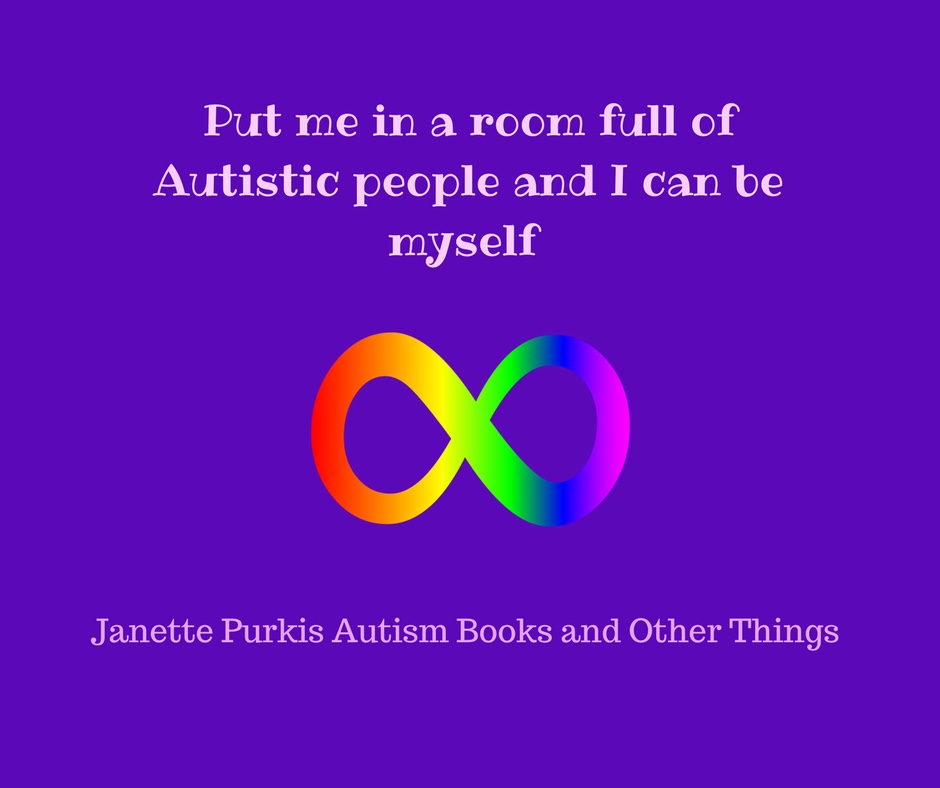
  • Understanding that autistic communication is as valuable and effective as non-autistic communication – just put a roomful of autistic people together and take notice of how they don’t have the kind of miscommunications as they might when communicating with non-autistic people. Viewing communication this way and having a sense of needing to learn to ‘speak autistic’ is a key part of understanding autistic young people and fostering a sense of pride.
  • Reading and viewing work by other autistic people – there are advocates who are children as well as adults and they often have some very useful strategies and understanding too. 
  • Make sure your child has access to autistic people as possible friends and also adult role models and mentors where appropriate. Adult autistics can be great translators and interpreters for kids and kids interacting with autistic adult role models is a very powerful way to build their self esteem and sense of pride.
  • Don’t punish a child for ‘autistic’ activities like stimming. And don’t fixate on or insist on eye contact, or on things perceived as ‘poor social skills’ that are just a bit different (e.g. parallel play at later ages than that at which after neurotypical kids might stop doing it). 
  • Encourage kids. Take an interest in their interests. Challenge and stretch them within their capacity so they will be proud of themselves for overcoming challenges. 

Thoughts on some ‘therapies’ to avoid

  • Parents of autistic kids, especially newly-diagnosed kids, want answers and want to help their child in whatever way they can. This is of course completely understandable but it is important to be aware there are lots of charlatans peddling pseudoscience ‘cures’ and ‘treatment’. Often these view  autism as an ‘epidemic’ or something that a person can recover from. If any individual or company talks about ‘cures’ and ‘recovery’ it is a good idea to avoid these at all cost. They won’t help your child and they will probably do more harm than good.
  • At the same time, beware of ‘evidence based’ therapies that are centred around compliance. This includes things like Applied Behaviour Analysis (ABA).
  • It is very rare indeed for a parent to intentionally do something harmful to their child. Unfortunately some ‘therapies’ which are marketed as being helpful and enabling your child to get along better in the non-autistic world but are in fact focussed on conditioning your child to act ‘less autistic’ (including ABA). This alone can have a huge negative impact on how your child views themselves.
  • This sort of ‘therapy’ does not support autistic children to develop into happy, fulfilled autistic adults. Instead it works to forcibly make a child seem less autistic. We don’t need to make autistic children try to look less autistic! We need to support them to be themselves and if anyone has an issue with their stimming – or whatever – well that person needs to be educated. There are a lot of documented cases of trauma in autistic adults who went through ABA as kids. I am certain their parents did not intentionally subject them to this knowing it would cause trauma. It would most likely have been promoted to those parents as a therapy to make their child somehow ‘better.’ Sadly this kind of thing rewards kids for doing often very stressful and unpleasant things like eye contact. It can also remove some of the child’s effective coping mechanisms. For example stimming is used by many autistic kids as a means to self regulate and address stress. You can imagine the impact that removing that one strategy  might have on a child.
  • These kinds of ‘therapies’ do not help kids to develop pride and value in themselves. In fact they could be seen as representing the enemy or antithesis of autistic pride.

I speak with parents every day and have given countless presentations to parent groups but I am n to a parent myself and my perspective in this piece is that of an autistic adult who has only relatively recently developed a sense of pride in who I am as an autistic person. If I had that sense of self-worth and pride as a kid going through all the horrors I did, I know it would have made a huge difference. Pride is a gift you can support your child to attain. 

Thank you 🙂

How we approach autism determines how we approach autistics people. So none of the talk about deficits, burdens, tragedies or disorders. More of the talk about strengths and passions and skills and unique brilliance.

Not OK – early mortality and autism

Content warning – general references to suicide

I read a research report the other day which showed the average life expectancy for autistic people as being as low as 39 years old*. Apparently the second most common cause of death for autistic people is suicide. Suicide rates are around nine times greater for autistic people than the general population. This horrified me on quite a few levels. I even made a meme about this which I decided not to post as my morning meme as I felt people might be triggered seeing that at breakfast. I have used it as the image for this post though as I feel it really needs to be said.

I turn 45 this year, That means I have had six years of borrowed time already according to the average. And when I reflect, I am only here due to luck. I should also by logic have fallen within that statistic on many occasions and at much younger ages. It has me very worried thinking about this for our community and all those wonderful autistic people in the world. What on earth do we do about this? And that is mostly not a rhetorical author blog post question which I will somehow respond to with clever prose. I actually don’t know what to do about it. I do have some thoughts on some of the issues and some thinking about what might help to address those though.

Autistic people experience mental illnesses at a greater rate than others. We also experience a lot of misdiagnosis in the area of mental health. I cannot count the number of autistic people I have met who have been wrongly diagnosed with borderline personality disorder. When we access mental health services – although maybe that should be ‘when we are subjected to mental health services’ as often they do more harm than good. Anyway, when we find ourselves in mental health care we are often ignored and dismissed. We may feel trapped and powerless because well, we are mostly. Even when we gain an autism diagnosis it can be ignored by mental health and other professionals, compounding that invalidation.

Another thing is the level of ableism in society. I talk about autistic pride but I am one of a relatively few voices in a  world loudly exclaiming that autistics should not be proud. We are called burdens and tragedies and other negative things, and we are paternalised and infantilised. School is so often a hell of bullying and it can be hard for us to form friendships and relationships. We are often isolated and disempowered at the same time. These days we may link in with our autistic peers and neurodivergent peers online but then again we might not. And for people who cannot access the internet that social world is denied.

We struggle to find meaningful work, even if we really want it and have skills and aptitude that in an allistic candidate would result in a stellar career. Or we are unable to work due to high anxiety and negative past experiences in the workplace traumatising us. There are autistic people with PhDs who cannot get a job in their area of study. Not working can mean isolation and no money and also a sense of failure – even if it is beyond our control. Being long-term unemployed when you don’t want to is another risk factor.

We are so frequently Queer – trans and gender diverse,  gay, lesbian, pansexual, asexual and lots of other ‘rainbow alphabet’ letters. Being Queer is seen by bigots as a reason for hatred and we experience that hatred at high levels. It is also compounded with the hatred and discrimination we experience as autistics in a  similar way to other intersectionalities. 

We don’t always have control over our lives. We are seen as incompetent and dependent. People who do not use verbal speech are often singled out for this but it happens to others too. We are frequently  deemed incapable of living independently but also not given the skills to do so. A lack of agency in your own life often leads to powerlessness and despair. We are so often creative thinkers and innovators who don’t get the chance to even manage our daily lives.

We often have physical illnesses and conditions which make life hard. And more to the point, our physical illnesses and health conditions can be invalidated and dismissed by health professionals for a number of reasons. How hard is it to access medical help when you have a different way of feeling pain? When you have a (misdiagnosed) mental health condition and doctors think you must be ‘making it up’? The toll which this takes on a person already managing a health condition is significant. 

These are all risk factors for mortality as I see it. This post thus far paints a bleak picture of disadvantage but I am not going to give up with this. So what do we do? How do we counter these issues? I think that what advocates and genuine allies are doling is a great start. If you look at these issues I have listed most of them are caused by a lack of understanding, respect and sympathy for autistic people and our experience. I think if these things change there should be a reversal in some of these issues around early death. And there needs to be something done and done soon as this statistic is not at all OK on any level. 

I do not consider myself old but by these statistics I an an elder statesman of the autistic community. I don’t want that. I don’t want to see my friends and peers succumb to an early death. They really, really don’t deserve it. For me I want to live to see where my work and my autistic colleagues’ work goes and to see the world change for the better for us. I know that advocacy alone is not going to fix this issue and I’m hoping there are some policy-makers looking at these figures and planning some positive intervention but I do think that people respecting and valuing autistic people and not subjecting us to some of the horrors mentioned here has to be a good thing and good start to turning this around. The world needs to know this statistic is not OK and what people can do to help address it.

*Reference: https://www.cambridge.org/core/journals/the-british-journal-of-psychiatry/article/premature-mortality-in-autism-spectrum-disorder/4C9260DB64DFC29AF945D32D1C15E8F2

Studies show the life expectancy for autistcis peopel as being under 40. This is seriously not OK.

Power to the impostor – insecurity and intersectionality 

This post is me reflecting on some thoughts around impostor syndrome and insecurity and the way society is structured and how we can work together to improve things.  

People who know my work probably think I am very confident in what I do. I have three awards shelves at my house, a 24 page master CV of my work in the autism community and a bunch of other apparently impressive accomplishments. The funny thing is that I am not objective about my advocacy career. If I stop to think about it I have very little confidence in my capability. I often find myself wondering why I have been asked to participate in a committee or why people ask me for advice, My default thinking  is ‘But I don’t know anything!’ I am quite surprised and relieved every time someone contacts me and asks for my input to something. As I imagine many of you know, I am not alone in this. Impostor syndrome is a very common occurrence.

It seems to me that people either have too low an opinion of their capability or too high – it is rare to find someone who is confident but realistic. I also think impostor syndrome is an intersectional issue. While avoiding generalisations, it does seem that people in a position of privilege are more likely to not experience impostor syndrome and those from intersectional groups are more likely to. I am a Queer, non-male autistic person with a serious mental illness and a history of poverty and homelessness. All of those elements of my experience seem to compound my lack or objectivity about my skills. Each of the groups that I belong to faces discrimination, bigotry and disadvantage. As such, my ability to be confident in my work seems to be diminished. Discrimination is all about making people think they don’t matter. If I don’t matter then  presumably I think that my work isn’t important or good either. What would I know about anything? The other thing which has triggered impostor syndrome and insecurity for me is being bullied a lot in school. Pretty much every message I got from peers was negative and hostile. Those kinds of experiences in formative years can result in internalised messaging of insults and self-hatred. 

Of course white, able-bodied cis gendered middle class straight men can also experience those feelings. However, seen in intersectional terms maybe insecurity can be seen as one element of oppression?

One of the things which people with impostor syndrome tend to experience is a need for reassurance. This is usually sought from others. When I joined the public service it took me many years to not have to check in regularly with my boss to make sure my work was a up to scratch. While it is great when people affirm us, it can become a bit of a trap if we need to seek external reassurance for everything we do – in my experience  that takes away my power and makes it harder for me to develop an internal sense of affirmation.

And impostor syndrome can be seen as being about personal power. The ability to think ‘I am doing good job and people benefit from my work’ is incredibly empowering. A lot of the time I spend time with others whose impostor syndrome and insecurity are as bad as mine. Wouldn’t it be great if we worked to empower one another? One issue with insecurity is that it can lead people to compare themselves to others and that is usually a recipe for disaster and disappointment. When I am in the depths of lacking any confidence in my work I can find myself feeling intimidated by others and the good things they do. On occasion this has lead to me having uncharitable thoughts about that person and being jealous. I hate that feeling and it comes right out of that sense of insecurity and powerlessness. I know I am not alone in that. If this happens I try to think that the other person probably has their own issues and that being jealous of people who also face disadvantage isn’t very helpful, or nice! This thought usually enables me to move past that jealousy and appreciate the other person and their work. Doing that actually does give me some power back. I wish I had known about that in the past.

If impostor syndrome is about power then let’s empower each other. Let’s build each other up and celebrate all our achievements. And let us give genuine reassurance to our peers and colleagues. Pride and respect and addressing bigotry and disadvantage are great ways of taking back power – and empowering others. Imagine an empowered group of people working to make the word a better place for autistic people and Queer people and people with mental illness and those facing poverty and homelessness and every other thing which society deems ‘other’.  

11224249_861398593941529_4714126399466128605_o

We are family – Autistic culture 

Last week I had what could only be described as a silly schedule. Four states and four events in five days. Lots of people expressed concern about the impact of all this busyness on my admittedly ‘interesting’ mental health. However, I wasn’t too worried because I knew that I would be with autistic friends and colleagues for most of the time and it would be empowering ratter than draining. I was correct and all the events were positive and energising, mostly due to there being lots of my autistic friends and peers in attendance.

I love autism events, but not so much because of the event but because of the attendees. There are quite a few people who attend these things who I love spending time with. Autism world events attended by actually autistic people  are a bit addictive! Being around ‘family’ or ‘tribe’ or however you put it is one of the best things ever.

When I am around my autistic peers I can be entirely myself. I will be understood and I will understand them. There is no worrying about subtext and hidden meanings in conversations. There is no worrying that I will be taken advantage of and tricked into doing something I don’t want to. There is a lot of shared experience and wonderful friendships.

Being with autistic people in a group is one of my favourite things. That ‘autistic space’ where we get to be around  others who are like us and who ‘get‘ us is magical. Autistic space is something I have only experienced a few times. It is where everyone is autistic and autists are managing things and making the decisions. It is wonderful and empowering.

The idea of autistic space is related to a few things – autistic pride, the Neurodiversity movement, the idea of ‘different not less’ but it also relates to that wonderful concept of autistic culture. I have been talking about autistic culture for a while now and I think the idea has stuck – well I hope it has! Autistic culture is based in the way autistic people generally communicate  differently to allistic people. Our communication is not ‘wrong’ or broken, it is just different. So if an autistic person is in a  roomful of allistic people then they will struggle with communication but if the situation is reversed and an allistic person is in a room full of autistic people then the communication issue will be reversed too and the allistic person will struggle with social communication.

It often feels to me like I am an expatriate in another country. I have learned the language and some of the customs but I am not at home. When I meet another expat from the land of Aut I am delighted as they know my country. We talk and relate our experiences of being in the strange land of the allistics and there is fellow feeling as we are of the same culture. My love os autistic space comes down to that. Autistic space is like a visit to our homeland. It is hard to leave autistic space. I often reflect that I would like to live in autistic space permanently. 

The thing about being among autistic ‘family’ is that it replenishes my energy and my mental health and wellbeing. I am not alone in this. Other autistics who have spent time in autistic space long to do so again. I have been wondering if there is a way to create autistic space which would last almost all the time. A community of autistic living and working together. A very nice idea but not something  I have the skills or funding to realise. It would be amazing to have such a place.   

I think the take away from these musings is that knowing your tribe, your family is a vital part of autistic people’s lives – it’s very lonely in a foreign country where nobody speaks your language and this is infinitely improved by compatriots sharing a metaphorical drink and sharing stories of home.

fullsizeoutput_c0f

All about April (or an alternative to awareness)

April is fast approaching. For me April means a lot of things, many of them difficult. In 2007 the United Nations specified 2 April as ‘World Autism Awareness Day’ presumably from good intentions. I am unsure how many autistic people were consulted in this but from what April seems to represent I suspect it was not a great many.

In April I always think of puzzle pieces and lighting things up blue and people talking about how ‘tragic’ autism is, how it ‘wrecks families’ and how autistic people are ‘burdens’. Inject a bit of cure talk and that very unhelpful concept of an ‘autism epidemic’ and that – as far as I perceive it – is April. I know few autistic people who look forward to April. I have a friend whose hair is usually blue but in April he dyes it pink so as not to be associated with ‘light it up blue’ (more about that later). 

I have been doing advocacy since the medieval period (or so it seems) and so I have seen a lot of things change, sometimes for the better and sometimes not. However, I have seen changes in thinking which are very promising. I am involved with an autism organisation which is neurotypical-run. I bit the bullet the other day and called and asked if they needed me to do anything for April. I must admit I was quite surprised when the staff member said ’oh we are more thinking of doing something for Autistic pride Day on 18 June’. 

Much more frequently these days I see articles in the media about neurodiversity. I see a LOT of other advocates doing amazing work and I see the beginnings of the mainstreaming of attitudes which were once considered radical. These are good things but we are not ’there’ yet by any means.

I attended an event not very long ago for an autism organisation which no longer exists. I was an influencer for this group – Well I thought I was. I said to them could we not go blue for April but instead go rainbow or gold. (For those who don’t  know, the ‘light it up blue’ campaign is closely associated with an organisation called Autism Speaks which has been very vocal in saying pretty much the opposite of all the things autistic advocates tend to think. I can count on the fingers of one hand the number of autistic people I have met who were OK with the messaging from this organisation,  I believe  that this organisation may be changing their focus gradually but they have been a very problematic presence for some time). Anyway, the organisation I was part of agreed not to do blue but when I attended their event all the balloons were blue and there was a huge blue cake. It was as if I never said anything! 

This kind of invalidation and tokenism is something I tend to associate with April *although of course it can happen in any month). It’s like it is done on behalf of autistic people with little for no input on what we actually want and need!

A part of the April thing which needs attention is the concept of ‘autism awareness.’ I am not alone in strongly disliking this. Awareness as a stand alone concept is meaningless. A bully is ‘aware’ their victim is different and it doesn’t stop them bullying. In fact that awareness may well be the excuse the bully uses to attack their victim! What does being aware of autism even mean? It doesn’t suggest understanding and could simply mean someone knows there are autistic people  in the world. 

Despite all this, myself and other advocates can have a busy schedule in April. A lot of my work in April involves dispelling the myths and misconceptions, which is actually a useful – if rather tiring – thing to do. This year I have some really lovely events planned. I am doing a book launch thing for Graeme Simsion alongside fellow autistic author Clem Bastow and then I am going to Brisbane for the Autism Cooperative Research Centre participant day where I will be among great friends – autistic and allistic alike. I then go off to Sydney for an awards night where hopefully I will see lots of autistic people getting awards for doing great things. I also have a presentation with Neurotribes author Steve Silberman and the I CAN Network CEO Chris Varney which will be recorded but aired in April. I’m also  doing a podcast which is a bit secret squirrel so I won’t say what it is but it will be cool. I think this rather silly amount of activities will be much less stressful than just doing one event where presenters’ thinking is counter to the needs and wishes of autistic people and I am actually looking forward to going to four states in four days! 

One thing about April is it tests my sense of what my message is and it forces me to evaluate where things are up to, inclusion-wise. As events go, autism day is like the canary in the mine. Each year it has happened I have seen differences, sometimes large but often subtle. It reminds me that the future is not a given. It is not set in stone. If advocates and genuine allies do not speak up things will revert to an awful past and all those gains we have fought for will need to be fought for all over again. So while April makes me cringe and dread the media articles that my role as an advocate means I have to read, I also look at it as a time to stake stock of what I am doing and ensure I am working to empower and liberate. 

So happy autism acceptance, respect, value, kindness, love, understanding, empowerment (and awareness) day.   

I don't want 'Autism Awareness' for April. I want Autism acceptance, understanding, empowerment, respect, love, value and inclusion. Can we have that?

Why did we do what we do? Motivation and the autism world

A conversation I had online the other day got me thinking about motivation: why do we do what we do? And does someone’s good work eclipse a less than pure motivation? I am someone who does a lot of work in the community and, while much of the time I am motivated by altruism and the wish to make a difference (i think!), sometimes I am motivated by a wish for approval or recognition. This bothers me. I have found myself on occasion thinking I would be a better fit for a presentation than the person who was asked to do it or getting excited when my face is used to promote something   also featuring other people. I actually like recognition and find it energises me. However after considerable soul-searching I have arrived at the conclusion that my approach is OK. Well OK conditional on me not promoting myself ahead of others, getting jealous of others or only doing things because they have a recognition element attached. 

I think I am doing reasonably well in this area, with some need for improvement. I’m not a saint! I actually think my liking of recognition can have a positive impact on my work reaching and hopefully helping more people. This is because when I do something helpful and get acknowledged with a thank you then it encourages me to do more of the same. I imagine if, when every time i did something I received harsh criticism or even indifference, it would discourage me from continuing to do what I do!

Enough about me and my moral dilemmas though. What about others? I think every variant of motivation is exhibited in the autism world. Some people have what I consider an actively negative motivation – promoting damaging ‘therapies’ and selling snake-oil ‘cures’. Preying on vulnerable families, kids and parents in order to earn a buck. Then there are people whose only reason for being involved in the autism sphere seems to be to make money. Of course we live in a capitalist country and so this is OK and legal but I find it hard to engage with people for whom my closely-held Autistic identity is seen only as a means for profit. Then there are people who think they are helping but, to my mind at least, probably aren’t. Then there are those who want to make a difference for a variety of reasons – autistic  advocates, non-autistic parents, partners and other sorts of allies, academics and researchers, businesses and mangers employing autistic  people and peak organisations. Each of these groups – and the individuals within them – will have different motivations.

In my own life, I sometimes come up against people who think they are doing positive things but who I strongly disagree with and have grave concerns that what they are doing is actually harmful to autistic people. An example would be those promoting ‘therapies’ based on forcing autistic kids to seem less autistic, e.g. autism conversion therapies. People doing this – as practitioners or parents sending their kids off to this untherapeutic ‘therapy’ – often think that they are doing the right thing. This feeling is often a  genuine thing for them – they believe they are doing right, even if chances are they are not. Imagine someone saying to you that your motivations are wrong? I find it often takes time for people in this situation to come around – if they do. When I argue against those people I usually depersonalise it and argue about the ideas. It is unlikely to change their thinking but will enable me to have a conversation that others may see and it plants a seed in their mind – hopefully!  Because of my past experiences I am a very patient person. Given how awful and unethical I was in the past and that I changed, I don’t ever want to write someone off straight away. I like to imagine that we are all on a journey at different points and I can maybe influence people through my experiences to help them get a bit further along on their own journey. Of course some people have intentionally negative motivations and there is little point engaging them in conversation. If Andrew Wakefield wanted to engage me in conversation, for example, I would tell him to go away (probably not using those words!!)

I think most people in our community are motivated by wanting to genuinely help autistic people to navigate life better but not everyone is on the same page about how to do that. My framework for this sort of things is:

  • Autistic people and our thoughts, experiences and needs need to be at the centre of every act and decision 
  • Autistic people need to be involved in any decision-making on anything which impacts us 
  • Anything which tries to turn us into something we are not (e.g. conversion therapies) is not good and not OK 
  • Outcomes need to benefit autistic people 
  • If autistic people are involved in a for profit activity or process they need to be paid accordingly 
  • Within advocacy, some ego can be a positive element driving people to do things they otherwise wouldn’t but it needs to take a back seat to altruism, respect and the need to make change. 

I think that the aim of leadership should be to create more leaders

Whimsy Manor manifesto

This is, well a bit of a whimsical look at what I like and want to see, packaged as a manifesto.

At Whimsy Manor we are all for:

  • Autistic pride and neurodiversity everywhere!
  • Art in all its forms 
  • Poetry, pushing the boundaries and shining a light on the world 
  • Decorating the walls like a gallery exploded
  • Music – sad songs, radical songs, folk songs and anything by Mozart
  • Equity, respect, inclusion and justice for everyone 
  • “Different not less”
  • Work and more work and more work….
  • Movie night!
  • Friends and family – especially family of choice 
  • CATS!!!!
  • Diversity and respect
  • Stimming and shiny things, glitter and sequins
  • The rainbow wig and its wiggy friends
  • Being Queer and being Proud
  • Autistic people being empowered and in charge of our lives  
  • The medication which makes the mental illness manageable 
  • Kindness. Lots of it
  • Coffee 
  • Comedy which empowers and critiques the status quo
  • “Nice things” 
  • Kids having a positive and enjoyable life free from trauma and other things which kids should never have to experience 
  • Everyone having a voice, including  those who do not use verbal speech
  • Love and then some more love 
  • Leaving the world better than it was when you arrived
  • Freedom – in the physical, emotional and every sense 
  • The opportunity to write
  • The opportunity to give presentations 
  • Autistic and neurodivergent peers, colleagues and friends 
  • Actually neurotypical peers, colleagues and friends as well
  • Gender diversity and gender fluidity and a world free from bigotry
  • The opportunity to change the world for the better 
  • Art. Did I already say that?
  • Seeing the beauty in people’s character 
  • A home for recharging the batteries, energy and ‘spoons’. 

And Mr Kitty is all for

  • Cat food
  • The Human
  • Cat food
  • Sleeping
  • Sunny spots
  • Cat food
  • Cat food.   

71IjPPhMQOqVbKObumI5MQ

Why Pride matters (and why Yenn enjoyed Mardi Gras so much)

Yesterday I did something I have wanted to do since I knew it was possible. I marched in the Sydney Gay and Lesbian Mardi Gras alongside around 30 other Autistic people and allies. The group I was with was Aspect / Autism Spectrum Australia. I have wanted to have – and be part of – an autistic presence at Mardi Gras for many years and I finally got to do it. It more than lived up to expectations. In fact it counts as one of the best things I have ever one. I am writing this and getting positive flashbacks from last night – the cheers of the crowd, being amongst friends and sharing their happiness, giving high fives from the spectators including getting a high five from a police officer! It was an incredible night. This is why.

I grew up in the 1980s. Being any kind of non-heterosexual sexuality or being gender diverse were things which many people hid. Homophobia was rife. In my later years of high school I overheard some of the boys saying they were going ‘poofter bashing’. There seemed to be a lot more hate than love. People were so often in the closet because it simply wasn’t safe to be out. I had friends in town who were a lesbian couple. They were older than me. They were out to a very small number of people. I came out as gay in year 12 – finding it hard to keep such a big part of me secret form those I loved. As an out teen I received a lot of hatred and bigotry including physical violence on a few occasions. I didn’t understand this hatred. Who I chose to sleep with surely had no impact on my classmates.

At this time I did not know I was autistic. I had tried for years to ‘fit in’ and be socially accepted but it never seemed to work. I was a hated and bullied teen. I was so damaged by bullying that I hated myself. This was the case for many years. I had no concept of pride in who I was. Autistic pride would have seemed a joke to me then. I was desperate to be accepted and ‘act normal’ (however one is supposed to do that! I never figured it out.) So the world of my formative years was not a supportive or respectful one.  

Gender, sexuality, neurodivergence. These things are an integral part of a person. These are things which go to our very being so the fact that there is hatred and bigotry for these reasons is particularly awful. If some one hated your shirt it would presumably be unpleasant but easy enough to brush off but when someone hates your very essence, well  that is dangerous.

Pride – Queer, Autistic, Disabled, pride in belonging to any oppressed group, these are positive things. They are in fact things which challenge oppression. We are given messaging that we shouldn’t be proud and that we should hate ourselves and be ashamed to exist. This internalised hatred is a key part of oppression. So when oppressed people own their difference and speak of pride and respect then this is a radical and wonderful thing.

IMG_4209

The initial Sydney Mardi Gras was a protest. It was 1978, a year when homosexuality was still illegal and considered a mental illness. Those activists literally fighting in 1978 have given us what we have now in terms of pride so respect is due them in a big way. Things are very different now largely because in the past people were willing to stand up and be counted. I mentioned to a friend last night that I loved how mainstream Mardi Gras is. How the City of Sydney put up rainbow things everywhere, how there were possibly hundreds of thousands of people lining the streets and cheering, how people smiled at me on the train in my rainbow wig and sequin shoes.

While the mainstreaming of Mardi Gras demonstrates a shift in societal thinking, there is still a lot more to be done. I want to see a world where everyone feels that they can be out – for sexuality, gender, neurodivergence – anything we are so frequently forced to hide away. A world where we don’t need a celebration like Mardi Gras because there is no bigotry and hate would be my goal but as it is, Mardi Gras is a great and necessary thing, a means of promoting pride and diversity and respect. It is also a whole load of fun and a great atmosphere. I think it would be impossible for me to have not been happy last night.

IMG_7318

It was quite emotional yesterday. I did a lot of high fiving the crowd and they were so enthusiastically cheering our Autistic group. To be there in the eyes of the world, being gender diverse, queer, Autistic and proud and being cheered on by thousands of people…well it was pretty special. At one point I felt quite overwhelmed with positive emotion. One of this moments where the world is so poignant and beautiful it just takes you over.

Pride is such an important concept for us. Pride challenges and changes society’s views and also changes our views of ourselves. I used to be ashamed of being me, especially when it came to my autism. To confidently and proudly say ‘I am Autistic Queer and proud’ banishes a lot of my own demons while giving a message to the world which can change people’s perception. The Mardi Gras parade is filmed by SBS. I hadn’t intended to speak to media but they waved a microphone at me and, with great emotion, I said ‘We are Aspect. We are Autistic, Queer and very proud. Thank you.’  I think that sums it up.

IMG_5474